Ragged grass tips, premature browning, uneven cutting and unusual mower vibration may indicate a blunt, worn or damaged blade. Sharpening is usually suitable when the blade is simply dull but remains structurally sound. Cracks, distortion, severe corrosion, significant wear or repeated sharpening may mean replacement is the safer option. Regular blade checks help maintain a cleaner cut and healthier-looking lawn.
Should I Sharpen or Replace My Lawn Mower Blade?
Keeping your lawn attractive and healthy depends on more than regular mowing. The condition of the blade beneath your mower also has a major influence on the finished result.
A sharp rotary blade cuts grass cleanly as it spins. Once its cutting edges become blunt, worn or damaged, the quality of that cut deteriorates. Your lawn may start looking untidy, even when you follow the same mowing routine as before.
Fortunately, the grass itself often provides useful clues. Ragged tips, uneven cutting and excessive browning may all point towards blade trouble. Changes in the mower’s behaviour can provide further warning signs.
Knowing what to look for helps you decide whether mower blade sharpening will restore performance or whether replacement is the better option. It also prevents you from repeatedly mowing a lawn when the blade is no longer doing its job properly.
Why Does Lawnmower Blade Condition Matter?
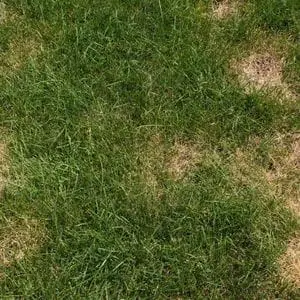 Rotary lawnmowers rely on a fast-spinning blade to cut the grass. When its cutting edges are sharp and in good condition, each blade of grass is sliced relatively cleanly.
A blunt mower blade behaves differently. Rather than making a neat cut, it may tear or shred the grass. Look closely after mowing and you might notice frayed fibres at the tips.
This damage affects more than appearance. Torn grass loses moisture more readily and the damaged tips often turn brown. The result may be a lawn with a dull or straw-coloured haze several days after mowing.
Damaged grass tissue may also be more vulnerable to environmental stress and some lawn diseases. Keeping mower blades in good condition therefore supports both presentation and plant health.
Ragged Grass Tips Are a Classic Warning Sign
One of the easiest ways to assess blade condition requires no tools at all. Inspect individual grass leaves shortly after mowing.
A sharp blade should leave a comparatively clean edge. If many grass tips look shredded, feathered or torn, the mower blade may have become blunt.
These symptoms are easier to see by examining the lawn closely rather than standing back. The overall finish might initially look acceptable, yet individual leaves reveal that the mower is tearing rather than slicing them.
Browning may become more obvious over the following days. This sometimes leads owners to suspect watering, feeding or disease problems when the real cause lies beneath the mower.
Before changing your lawn care routine, checking the blade is therefore a sensible first step.
An Uneven Finish May Point Towards Blade Problems
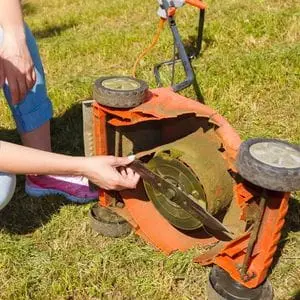 Poor blade condition does not always produce uniformly ragged grass. A damaged or badly worn blade may contribute to an inconsistent finish across the lawn.
You might notice strips of grass left taller than surrounding areas. Individual tufts may remain standing after the mower passes over them. In more severe cases, the finished cutting height appears irregular.
However, uneven mowing has several possible causes. Incorrect deck settings, clogged grass beneath the mower, wheel problems and challenging grass conditions may produce similar symptoms.
The blade is therefore one part of the investigation rather than an automatic diagnosis. If the mower is correctly set up and the deck is clear, inspecting the blade becomes increasingly important.
Look for Visible Wear Along the Cutting Edge
Mowing gradually wears down metal blades. Contact with soil, stones, twigs and other debris accelerates that process.
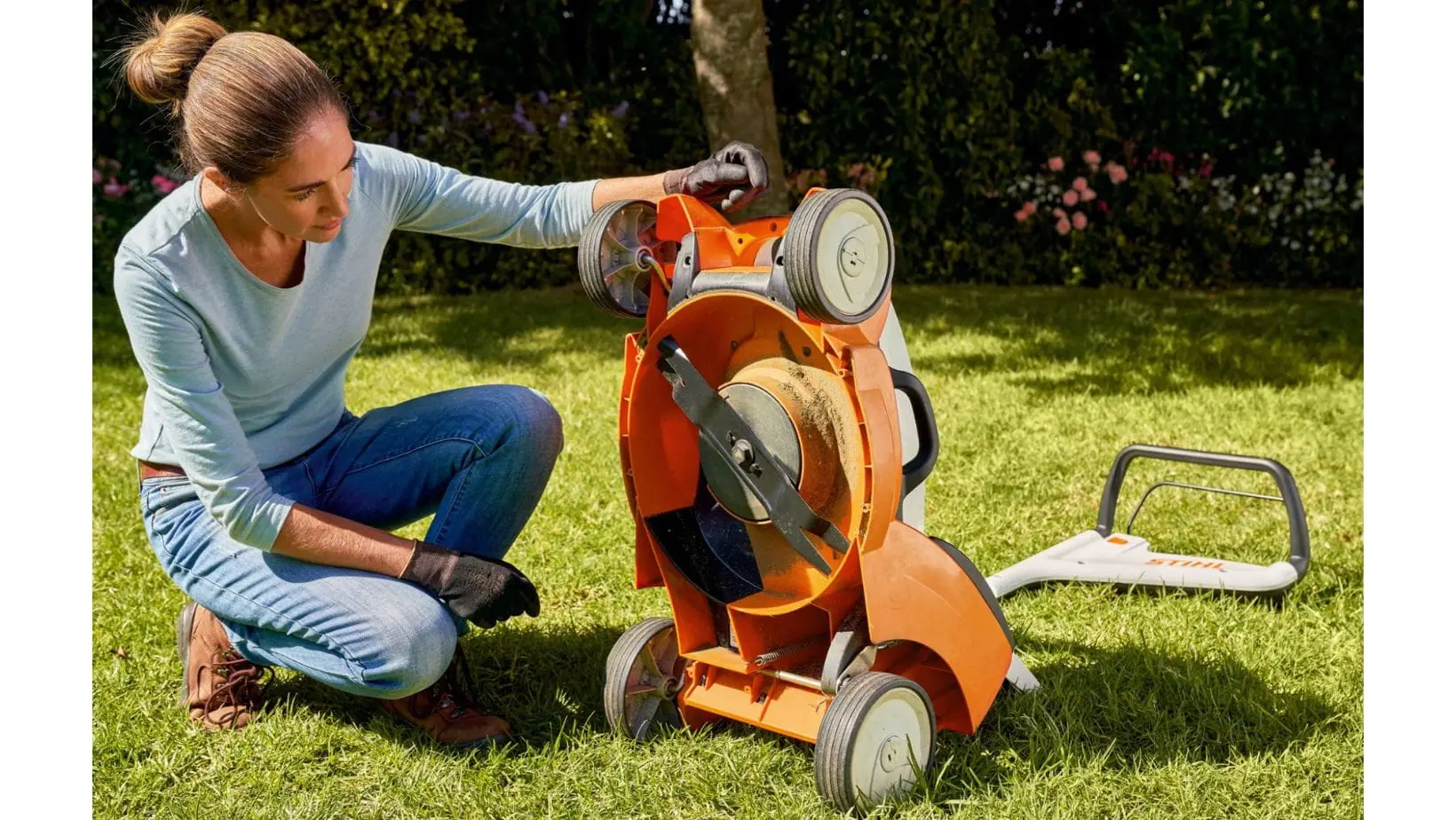
Once the mower is safely isolated from its power source, the blade can be inspected according to the manufacturer’s instructions. Petrol machines should be made safe before any work begins, while cordless models require the battery to be removed. Always follow the lawnmower manufacturer’s safety guidance.
Look closely at the cutting edges. A blade that has simply lost its sharp edge may be suitable for sharpening. Greater concern is warranted when the metal has become heavily worn, badly nicked or visibly distorted.
Repeated sharpening also removes material. Eventually, a blade may reach the point where further grass mower blade sharpening is no longer appropriate.
This distinction matters because sharpening and replacement solve different problems.
When Is Sharpening a Lawnmower Blade Enough?
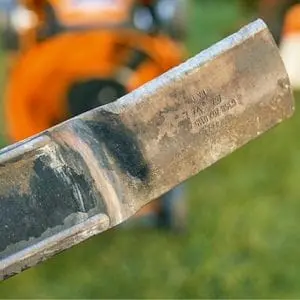 A blade does not need replacing simply because its cutting edge has become dull. If it remains structurally sound, sharpening can restore an effective cutting edge.
People who maintain their own equipment have several options. A suitable lawn mower blade sharpener may be used, provided the blade manufacturer permits sharpening and the correct procedure is followed.
A blade sharpener for lawn mower blades can encompass a variety of designs. These range from simple sharpening aids to equipment intended for more experienced users.
Whichever method you choose, maintaining the correct cutting angle matters. Removing excessive material should also be avoided.
The blade must remain correctly balanced after sharpening. An unbalanced blade rotating at high speed could cause excessive vibration and place additional strain on mower components.
For that reason, the best way to sharpen lawn mower blades is not simply whichever method removes metal fastest. It is the method that produces an appropriate cutting edge while preserving the blade’s shape and balance.
In terms of finding the best way to sharpen mower blades on different machines, always follow the manufacturer’s guidance rather than assuming one technique suits every blade.
How Often Should You Sharpen the Lawn Mower Blades?
There is no universal sharpening interval that suits every lawn or mower.
Condition is generally a better guide than the calendar alone. A mower used frequently across a large area may dull its blade much sooner than one cutting a small domestic lawn.
Ground conditions make a difference too. Sandy soil and debris can accelerate wear, while accidental contact with stones or other hard objects might damage an edge immediately.
Checking the quality of the grass cut is therefore useful throughout the mowing season. Periodic blade inspection reveals deterioration before it has a noticeable effect on the whole lawn.
Choosing the Right Lawn Mower Blade Sharpening Tool
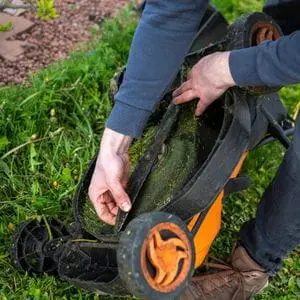 If you intend to sharpen a removable rotary blade yourself, use equipment suited to that task.
A lawn blade sharpener should allow you to work accurately and retain the correct profile. Depending on the blade and manufacturer’s instructions, the style of the equipment can vary. The term ‘lawnmower sharpener’ covers a broad range of products, so compatibility should always take priority over convenience.
If you’ve searched online for ‘lawn mower blade sharpening near me’, you’ll find that a competent technician understands the importance of blade condition, correct sharpening and balance, rather than simply grinding a new edge. Professional help is particularly worthwhile if you’re unsure whether an older blade remains safe to reuse.
When Should a Lawnmower Blade Be Replaced?
Sharpening addresses a dull cutting edge. It cannot restore a blade that has suffered significant structural damage or excessive wear.
Deep cracks are a clear reason for concern. A bent or badly distorted blade should not simply be sharpened and returned to service. Significant chips, severe corrosion or substantial metal loss usually make lawn mower blade replacement the more appropriate choice.
Impact damage deserves particular attention. Striking a hidden stone, tree root, metal object or solid edging may deform a blade or damage its cutting edge.
If the lawnmower suddenly develops unusual vibration after an impact, stop using it and investigate. A damaged or unbalanced blade is one possible cause, although other mower components may also have been affected.
Replacing a suspect blade is not merely about improving the appearance of the lawn. A rotary blade operates at considerable speed, so its structural condition is important to the machine itself and the operator’s safety.
Has the Blade Been Sharpened Too Many Times?
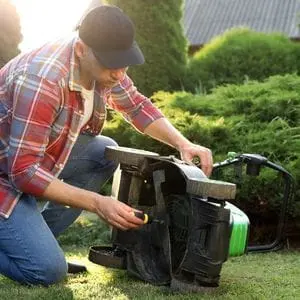 A well-maintained blade may be sharpened several times during its working life, but it will not last indefinitely.
Every sharpening removes a small amount of metal. Over time, repeated maintenance changes the blade’s dimensions and reduces the material available around its cutting areas.
This is why an old blade should be inspected as a complete component rather than judged only by whether another sharp edge could be created.
If it has become excessively worn, fitting a lawnmower replacement blade is usually preferable to extending its life unnecessarily.
When purchasing lawnmower replacement blades, use the mower model and relevant part information to identify the correct component. A blade that happens to have a similar length is not necessarily compatible.
Finding the Correct Replacement Blade
Choosing a new blade for lawn mowers requires more than measuring the old one from end to end.
Mounting arrangements, blade profile, dimensions and other specifications may vary between mower models. Using the correct replacement is important for fit, cutting performance and safe operation.
When searching for walk-behind mower replacement blades, be aware that two mowers with similar cutting widths could use very different components.
Check the machine’s exact model details and consult the appropriate parts information. Where possible, identifying the manufacturer’s specified part number provides additional reassurance.
If you’re in any doubt, seek expert advice rather than guessing.
What About Robot Mower Blades?
 Robotic lawnmowers introduce a slightly different maintenance routine. They tend to use several small replaceable blades rather than the larger single rotary blade found beneath a conventional lawnmower.
These small blades perform an enormous number of cuts during regular operation. Their edges therefore wear quicker than walk-behind mowers and require more frequent replacement.
A decline in cutting quality again provides a clue. Grass tips may appear less cleanly cut, while the lawn’s overall finish can deteriorate.
Robot mower owners should follow the replacement intervals and procedures recommended for their particular machine. All blades in the relevant set should be dealt with as instructed by the manufacturer.
Correct parts are just as important here as they are with a conventional mower.
Sharpen, Replace or Ask an Expert?
The decision becomes much easier when you separate ordinary dullness from actual damage.
A structurally sound rotary blade that has simply become blunt may respond well to careful sharpening. Using an appropriate lawnmower blade sharpener and checking the finished balance may extend its useful working life.
A cracked, bent, badly corroded or severely worn blade presents a different situation. A lawnmower replacement blade offers a more appropriate solution where sharpening cannot restore the component to suitable condition.
If you’re uncertain, avoid taking chances. Professional assessment can help establish whether a blade sharpener for mowers remains worthwhile or replacement is due.
Keep Your Mower Cutting Cleanly with Ron Smith & Co
A deteriorating mower blade often announces itself through the lawn. Frayed grass tips, premature browning and a poorer finish are all worth investigating. Visible blade wear, unusual vibration or damage after an impact deserve close attention too.
Sharpening is often sufficient when a rotary blade is merely blunt and otherwise remains in good condition. However, there comes a point when further sharpening is neither the safest nor most effective answer. Recognising that distinction helps protect your mower while supporting a cleaner, healthier-looking lawn.
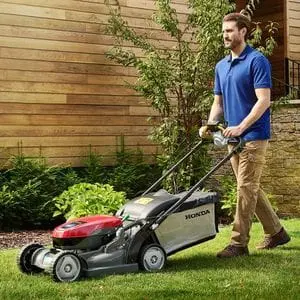 Ron Smith & Co stocks an impressive collection of spare rotary lawnmower blades for a wide range of machines. We also supply spare blades for robotic lawnmowers through our dedicated Robot Mower Shop.
You can use the Spare Parts Finder on our website too. This provides a useful starting point when you need to identify suitable lawnmower replacement blades for your machine.
Should you require further help identifying the correct component or guidance on blade condition, our friendly staff are always on hand to offer expert advice. And if you’ve been searching online for ‘lawnmower blade sharpening near me’, we have branches in both Hereford and Worcester, along with full email and telephone support.
Keeping the right cutting edge beneath your mower could make a noticeable difference to both the appearance and health of your lawn.