Choosing the right petrol water pump depends on the water's condition, the size of any debris and the required pumping capacity. Clean water pumps are suited to relatively clear water, dirty water pumps handle sediment and smaller particles, while trash pumps accommodate larger solids. Other important factors include flow rate, suction head, total head and hose diameter.
How to Choose the Right Petrol Water Pump
Whether you’re dealing with a flooded garden, overflowing pond or waterlogged building site, removing excess water quickly can prevent further damage and disruption. However, choosing the right petrol water pump isn’t simply a case of finding the most powerful machine. Different pumps are designed for different water conditions, and selecting the wrong type could lead to blockages, poor performance or costly repairs.
From clean water pumps used for irrigation to heavy-duty trash pumps designed for debris-filled floodwater, understanding the differences is essential. You’ll also need to consider pumping capacity, maximum lift and the size of any solids suspended in the water.
This guide explains how to choose a petrol water pump for flooding, drainage and dirty water, helping you find the most suitable machine for your needs.
Why Choose a Petrol Water Pump?
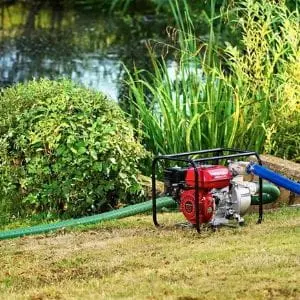 Petrol water pumps offer a practical way to move large volumes of water without relying on mains electricity. This makes them particularly useful in remote locations, across agricultural land and on construction sites where power may be unavailable.
Their portability also makes them well suited to emergency drainage. If heavy rainfall leaves your garden flooded or a ditch overflowing, a petrol-powered pump allows you to begin removing water without installing a permanent drainage system.
Depending on the model, a petrol water pump may transfer hundreds or even thousands of litres per minute, making it suitable for substantial drainage tasks.
However, not all petrol pumps are designed to handle muddy water or solid debris. Before choosing a machine, it’s important to understand the three main categories.
Clean Water Pumps, Dirty Water Pumps and Trash Pumps: What’s the Difference?
Although these terms are sometimes used interchangeably, they describe pumps with different capabilities. The main distinction is the size and quantity of debris each machine can safely handle.
Clean Water Pumps
A clean water pump is primarily designed to move water containing little or no solid material. Typical applications include garden irrigation, transferring water between storage tanks and draining swimming pools.
These pumps generally have narrower internal passages than models designed for contaminated water. While some tolerate very small particles, larger solids may obstruct the impeller or damage internal components.
A clean water pump is therefore a sensible choice when the water source is relatively clear. However, it may not be suitable for a flooded garden containing mud, gravel or accumulated debris.
Dirty Water Pumps
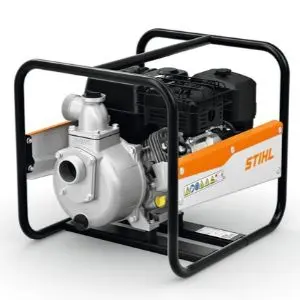 A dirty water pump is designed to handle water containing sediment, silt and small solid particles. These machines are particularly useful for draining flooded gardens, emptying ponds and removing water from excavations.
Compared with clean water pumps, they typically feature components and internal passages designed to tolerate greater contamination.
However, the term ‘dirty water pump’ covers a broad range of machines. Some models handle only small particles, while others accept considerably larger solids.
For example, a pump capable of passing 6 mm particles may be suitable for sandy or silty water but struggle with larger stones and debris.
This is why it’s important to check the manufacturer’s maximum solids-handling specification rather than relying on the product description alone.
Trash Pumps
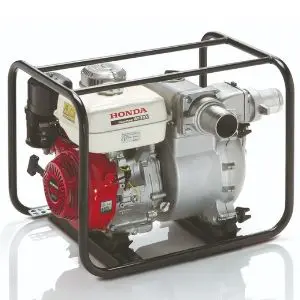 A trash water pump is designed for more demanding drainage work, particularly where water contains larger solids and substantial debris.
These machines usually feature robust impellers, abrasion-resistant components and wider internal passages to reduce the risk of blockages.
Many also incorporate removable inspection covers, allowing operators to access the pump housing when cleaning is required.
A petrol trash pump is particularly useful for construction-site drainage, agricultural applications and floodwater containing stones or other solid material.
However, even a heavy duty dirty water pump has limitations. Thick sludge, long fibrous debris and oversized stones may still cause blockages or damage.
How to Choose the Right Petrol Water Pump
Once you’ve identified the type of water you need to move, several technical factors will determine which pump is most suitable.
Consider the Water’s Condition and Debris Content
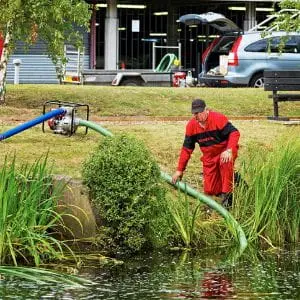 Before comparing engines or flow rates, examine the water itself.
Clear water collected in a storage tank presents a different challenge from floodwater containing soil, leaves and gravel.
If you’re draining a garden after heavy rainfall, consider whether the water contains suspended sediment or larger debris washed across the ground.
A general-purpose pump may handle lightly contaminated water, but more demanding conditions could require a dedicated trash pump.
Always check the maximum solids size specified by the manufacturer. Remember that this figure describes the largest permitted particles, not the quantity of debris the machine can continuously process.
Check the Maximum Flow Rate
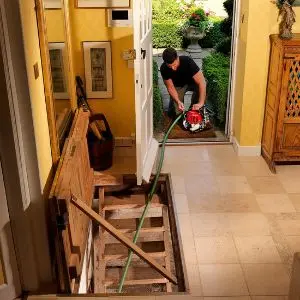 Flow rate describes how much water a pump can move within a given period. It’s usually measured in litres per minute or cubic metres per hour.
A higher flow rate is particularly useful when draining large, flooded areas, where removing substantial volumes of water quickly is a priority.
For example, a pump with a maximum flow rate of 1,000 litres per minute has a theoretical capacity of 60,000 litres per hour.
However, this figure represents performance under favourable conditions. The actual flow rate will depend on hose length, elevation, friction losses and other operating conditions.
Consequently, the machine with the highest advertised flow rate isn’t necessarily the best choice for every drainage task.
Understand Suction Head and Total Head
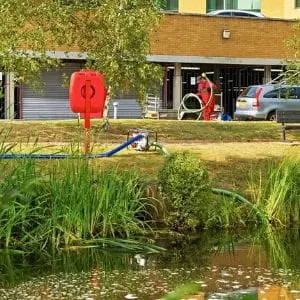 Two other important specifications are suction head and total head.
Suction head refers to the vertical distance between the water surface and the pump’s inlet. Petrol surface pumps draw water through a suction hose, so they must be positioned within their permitted suction height.
Total head describes the energy available to move water against elevation and resistance, expressed as an equivalent height in metres.
The greater the height through which water must be lifted, the more demanding the pumping task becomes.
Long hoses, bends and narrow pipework also create resistance, reducing the flow available at the discharge point.
When choosing a water pump for flooding, consider where the water will be collected and where it needs to be discharged.
Choose the Correct Hose Diameter
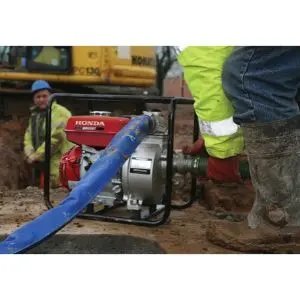 Hose diameter has a significant influence on pumping performance.
Larger hoses generally allow greater volumes of water to pass with less frictional resistance, making them useful for high-capacity drainage.
Petrol water pumps commonly feature 2-inch or 3-inch connections, although other sizes are available.
It’s important to use hoses and fittings compatible with the manufacturer’s specifications. An undersized discharge hose can restrict performance, while an unsuitable suction hose may collapse under vacuum.
Suction hoses should be reinforced, airtight and fitted securely to prevent air entering the system.
You’ll also need to check whether the pump includes the necessary hoses, couplings and suction strainer, as these accessories are not always supplied with the machine.
Consider Portability and Working Conditions
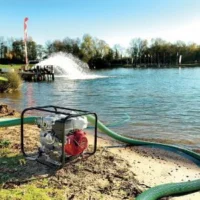 The weight and construction of a petrol water pump are important considerations, especially if it needs to be moved frequently.
A small dirty water pump may be easier to transport around domestic gardens, where access can be restricted.
Larger machines are often better suited to demanding commercial applications, although their greater weight may make them less convenient to reposition.
Look for a sturdy protective frame, stable mounting points and a design that provides access to routine maintenance components.
Recommended Petrol Water Pumps for Different Applications
Choosing the right petrol water pump depends on the type of water you’re moving and the conditions in which you’ll be working. To give you a clear idea of the types of petrol water pump we offer, we’ve selected two excellent models from STIHL and Honda. Each offers distinct advantages, making them suitable for different drainage and water-transfer tasks.
STIHL WP 600 Petrol Water Pump: High-Capacity Water Transfer
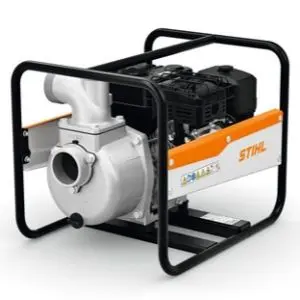 The STIHL WP 600 is a powerful general-purpose machine designed for demanding water-transfer and drainage applications. Suitable for domestic and commercial use, it combines impressive pumping capacity with a robust, portable design.
Powered by a 212 cc STIHL EHC 605.0 four-stroke engine, the WP 600 delivers a maximum flow rate of 1,050 litres per minute. Its 3-inch hose connections make it particularly useful for moving substantial volumes of water during garden drainage, irrigation and floodwater removal.
The pump offers a maximum suction head of 7 metres and a total head of 31 metres, providing flexibility across different working environments.
A protective frame helps shield the engine and pump, while STIHL’s anti-vibration system reduces mechanical stress during operation. A low-oil protection sensor also helps prevent engine damage.
The WP 600 is suitable for relatively clean water and lightly contaminated water containing particles up to 6 mm in diameter. This makes it a versatile choice for irrigation, garden drainage and other water-transfer tasks, although it isn’t designed to handle the larger debris associated with dedicated trash pumps.
Find out more about the STIHL WP 600 Petrol Water Pump here.
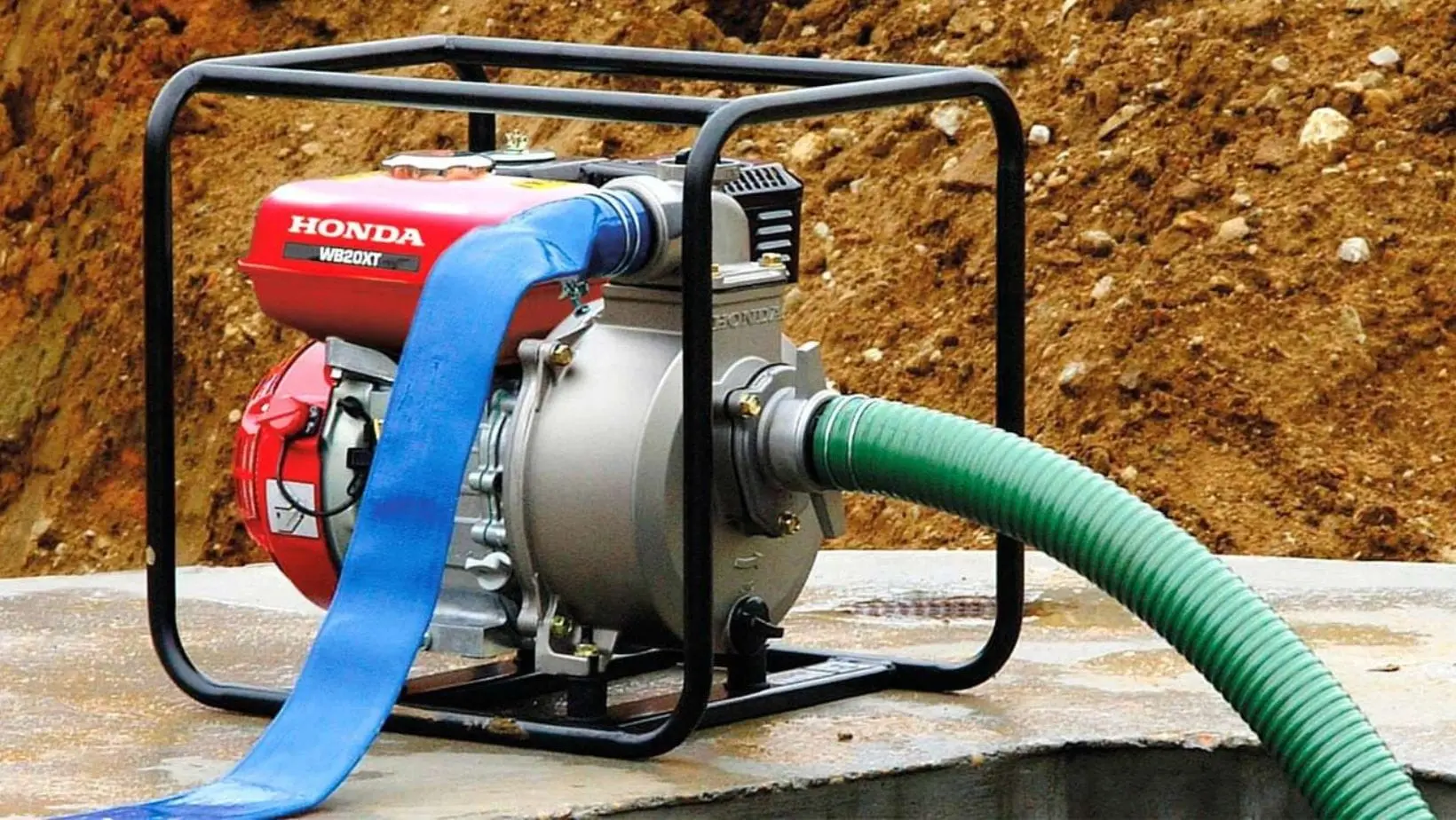
Honda WT20 2 Inch Trash Pump: Built for Demanding Dirty Water Drainage
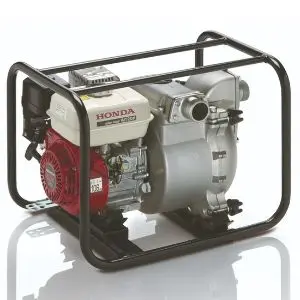 For applications involving larger solids and more heavily contaminated water, the Honda WT20 2 Inch Trash Pump offers a robust solution.
Powered by Honda’s commercial-grade GX160 four-stroke engine, this petrol trash pump is designed for demanding drainage work on construction sites, agricultural land and other challenging locations.
With a maximum flow rate of approximately 700 litres per minute, it can transfer substantial volumes of water while accommodating solids up to 24 mm in diameter.
Its conical cast iron impeller, durable volute and silicon carbide mechanical seal provide resistance to wear when pumping water containing abrasive particles.
A removable inspection cover allows convenient access to the pump housing, helping operators clear accumulated debris and reduce downtime.
The WT20 also features Honda’s Oil Alert system, which automatically stops the engine if the oil level becomes dangerously low.
Combining dependable engine performance with substantial solids-handling capacity, this Honda trash pump is particularly well suited to demanding dirty-water applications.
Discover more about the Honda WT20 2 Inch Trash Pump here.
Choosing a Water Pump for Flooded Gardens, Ponds and Ditches
The right pump depends on where the water has collected and what it contains.
Flooded gardens often contain soil, grass clippings and other organic material washed across the ground during heavy rainfall. A dirty water pump may therefore be more appropriate than a clean water model.
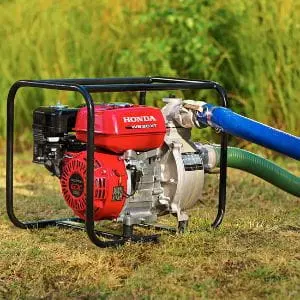 For relatively clear standing water, a general-purpose petrol pump may be sufficient, provided any suspended particles fall within its specified limits.
Where flooding has washed stones, gravel or larger debris into the affected area, a trash pump may offer a safer and more reliable solution.
Ponds and drainage ditches present additional challenges because the water often contains sediment and organic matter.
When choosing a dirty water pond pump, consider whether you’re removing relatively clear water from above the pond bed or attempting to pump water containing accumulated silt.
A general-purpose pump may be suitable for the former, but the latter could require a more debris-tolerant machine. Even then, thick sludge and fibrous vegetation may be unsuitable for a conventional centrifugal water pump.
Using a suitable suction strainer helps prevent oversized material from entering the pump. Positioning the intake above the bottom can also reduce the amount of sediment drawn into the machine.
Before pumping, identify a suitable discharge location. Water should be directed somewhere it can drain safely without causing flooding elsewhere.
If you’re draining a wildlife pond, take care to protect fish and other aquatic life. You should also check whether environmental restrictions apply before draining a natural watercourse.
Water Pumps for Construction Sites and Waterlogged Ground
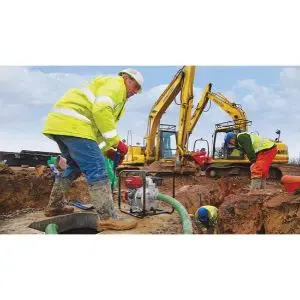 Construction sites usually require more demanding drainage equipment than domestic gardens.
Foundation trenches and other excavated areas can collect large amounts of rainwater, while loose soil and aggregates increase the risk of sediment entering the pump.
Therefore, a heavy duty dirty water pump may be necessary, particularly where the water contains abrasive particles.
For water containing larger solids, a dedicated trash pump such as the Honda WT20 offers greater debris-handling capability.
However, the pump must still be matched to the material being handled. Highly concentrated slurry, cement-contaminated water and thick sludge may require specialist equipment.
Contractors should also consider how frequently the pump will operate, the distance to the discharge point and the ease of cleaning its internal components.
How to Use a Petrol Water Pump Safely and Effectively
Correct operation is just as important as choosing the right pump.
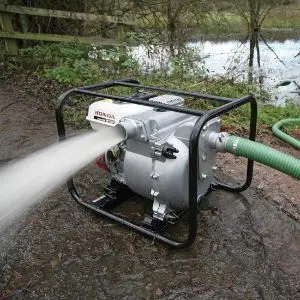 Petrol-powered machines produce carbon monoxide, so must only be operated outdoors in well-ventilated locations. Never run one inside a basement, garage or other enclosed space, even when removing floodwater.
Position the pump on firm, level ground, away from unstable edges and areas where rising water could reach the engine.
Before starting, check the engine oil, fuel level and hose connections. Many petrol surface pumps also require the pump housing to be filled with water before starting. This process, known as priming, helps the pump establish suction.
Always follow the manufacturer’s instructions, and never allow a pump designed for wet operation to run dry.
Ensure the suction strainer remains submerged and clear of obstructions. Avoid placing it directly in thick sediment unless the pump is specifically designed for that application.
After pumping dirty water, flushing the system with clean water, where recommended by the manufacturer, helps remove abrasive particles and accumulated debris.
Remember that floodwater may contain sewage, chemicals or other hazardous substances. Standard petrol water pumps are not necessarily suitable for these materials, which may require specialist handling and disposal.
Common Questions About Petrol Water Pumps
Can I Use a Clean Water Pump for Dirty Water?
Only if the manufacturer confirms that the pump can handle the particles present.
Some general-purpose pumps tolerate small amounts of sediment, but larger solids may cause blockages or internal damage. If the water contains substantial debris, choose a suitable dirty water or trash pump instead.
Is a Trash Pump Better Than a Dirty Water Pump?
Not necessarily. A trash pump is designed to handle larger solids, but it may be heavier or less convenient for straightforward drainage work.
For relatively clear water containing only fine sediment, a smaller general-purpose pump may be entirely sufficient.
The best choice depends on debris size, pumping capacity and the conditions in which the machine will operate.
Find the Right Petrol Water Pump at Ron Smith & Co
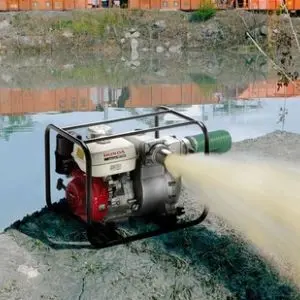 Whether you’re tackling a flooded garden, draining a pond or removing water from a construction site, choosing the correct pump makes the job safer, easier and more efficient.
The most important factors are the condition of the water, the size of any debris, the required flow rate and the distance through which the water must be moved.
We sell an excellent range of Honda and STIHL water pumps for domestic and commercial users, including high-capacity general-purpose machines and robust trash pumps for demanding drainage work.
With years of experience supplying quality garden machinery and professional equipment, our friendly staff are always on hand to offer expert advice. If you’re unsure which petrol water pump is right for your needs, please get in touch and we’ll be happy to help you choose a suitable model.