Choosing the right garden cart or trailer depends on what you’re transporting, load capacity, terrain, site size and frequency of use. From wheelbarrows and hand trolleys to tractor trailers and powered barrows, different designs suit different workloads and working environments.
Which Type of Garden Cart or Trailer Is Right for You?
Moving logs, soil, compost or garden waste is much easier with the right equipment. However, that does not necessarily mean choosing the option with the greatest carrying capacity. The best solution depends on what you transport, where you work and how regularly you need to move materials.
For smaller gardens, a conventional wheelbarrow or specialist cart may provide all the capacity and manoeuvrability you need. Larger properties could justify a substantial hand trolley, while estates and paddocks may benefit from a trailer towed behind a suitable tractor or ATV. Professional users carrying heavy materials throughout the day have another option in the form of a powered barrow.
In this guide, we explore the main considerations and look at five different transport solutions available at Ron Smith & Co.
Think About What You Need to Transport
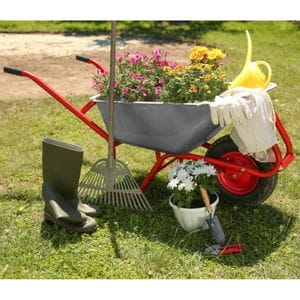 Before comparing capacities, consider the materials you expect to move. Loose compost, soil and grass clippings have different transport requirements from logs, paving materials, tools or bulky garden waste.
A traditional wheelbarrow remains remarkably versatile. Its open tray is well suited to loose material, while the single-wheel design provides excellent manoeuvrability. If you’re looking for the best wheelbarrow for gardening, think about tray construction, tyre design and ease of tipping as well as capacity.
Other jobs benefit from a different approach. A purpose-built log cart makes transporting firewood easier, while a four-wheel trolley provides greater support beneath heavier loads. Larger quantities of soil, logs and landscaping materials may justify a tow-behind trailer or powered barrow.
Terms like garden barrow cart can cover equipment with quite different characteristics. This is why identifying the job comes before choosing the design.
How Much Carrying Capacity Do You Really Need?
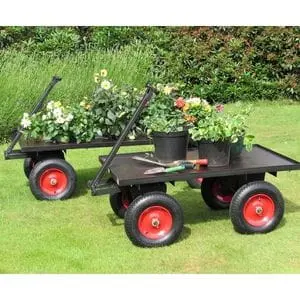 Capacity is an obvious comparison point, but bigger is not automatically better. A large garden wheelbarrow cart could become cumbersome in a compact garden, while an undersized model means making more journeys than necessary.
For occasional domestic work, a manual barrow may provide ample room without taking up excessive storage space. A larger four-wheel cart becomes more attractive when substantial loads are moved regularly. Once workloads increase further, powered or tow-behind equipment could save considerable time and physical effort.
Also consider whether capacity is quoted by weight or volume. A 100-litre wheelbarrow tells you how much space is available in its tray, whereas a 500 kg power barrow rating tells you the maximum load weight. Therefore, the density of whatever you are transporting matters.
When comparing garden barrows and carts, focus on usable capacity for your particular jobs rather than simply choosing the largest figure.
Match Your Choice to the Terrain
 The ground between your loading and unloading points deserves just as much attention as the load itself.
Firm paths and relatively level gardens place fewer demands on transport equipment. Grass, gravel and uneven ground make wheel size, tyre construction, stability and traction much more important. Soft lawns introduce another concern because concentrated weight may mark the surface.
Pneumatic tyres provide useful cushioning when crossing rough terrain, while puncture-proof tyres remove the inconvenience of flats. Wide-profile trailer wheels can spread heavy loads over a larger area, helping to reduce marking on softer ground.
Powered transport becomes particularly appealing when heavy materials need to travel repeatedly across a larger site. Rather than focusing on the best garden cart by capacity, consider the entire route it will have to negotiate.
Consider the Size and Access of Your Garden or Site
 Compact gardens tend to favour simple manual equipment. A wheelbarrow requires no towing machine, takes relatively little room to store and works well where access is restricted.
As the working area grows, the distances involved become more significant. Moving a modest load by hand across a small garden is one thing. Repeating the same journey across a large estate or commercial site is quite another.
Access matters too. Gates, pathways, buildings and tight turning areas may rule out equipment that otherwise looks ideal on paper. Conversely, large open spaces make the greater capacity of a garden tractor and trailer combination much more practical.
The right choice should suit both the scale and layout of the property.
How Often Will You Use It?
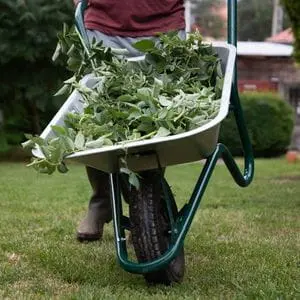 Frequency of use changes the equation considerably. Someone moving a few bags of compost each spring has very different requirements from a landscaper transporting materials throughout every working day.
For occasional jobs, the simplicity of manual equipment is difficult to beat. There is little preparation involved, maintenance requirements are generally modest, and the equipment is ready whenever it is needed.
Regular heavy work makes reducing operator effort increasingly valuable. A four-wheel cart supports the load differently from a traditional wheelbarrow, while powered equipment takes this principle much further. Likewise, a lawn tractor trailer allows owners of compatible machinery to use engine power for transporting substantial quantities around larger grounds.
Think about the cumulative workload rather than one journey. Saving a little effort on each trip becomes far more important when that trip is repeated dozens of times.
Wheelbarrow, Cart or Trolley?
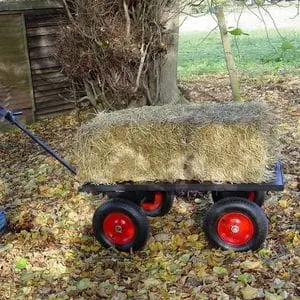 The traditional wheelbarrow has endured for good reason. Its simple design works across countless gardening and construction jobs, while its manoeuvrability makes it particularly useful in restricted spaces.
If you’re searching for the best wheelbarrow for your needs, it’s worth looking beyond the top rated wheelbarrows. A wheelbarrow heavy duty model designed for frequent site work may be unnecessary for occasional light gardening. Equally, a popular lightweight model for domestic use probably won’t suit demanding professional work.
A four-wheel garden cart barrow or trolley supports more of the load itself, reducing the amount of weight the operator needs to balance. It may also provide a larger loading area and greater carrying capacity. Some designs offer removable sides, allowing awkward items to be accommodated more easily.
The trade-off is size. Four wheels and a larger body need more room to manoeuvre and store. Your working environment should determine whether that extra capacity is worthwhile.
Transport Solutions at Ron Smith & Co
To give you an idea of the type of barrows, carts and trailers on offer, let’s take a look at five of the many different products that we sell. Once you see the variety of transport solutions available and how they differ in design, it should give you a better idea of the type of garden barrows and carts best suited to your work.
Handy THLC Log Cart: A Specialist Choice for Firewood
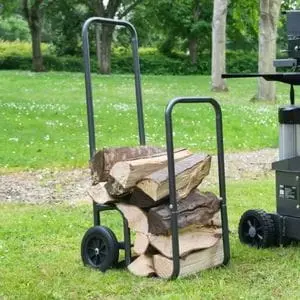
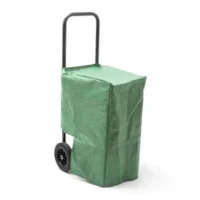 If logs are your main concern, the Handy THLC Log Cart provides a purpose-built alternative to a conventional barrow. Its tubular steel frame supports loads up to 100 kg, while large rubber tyres aid movement around outdoor areas.
An open design simplifies loading and unloading, and a waterproof cover helps protect firewood in damp conditions. This makes it particularly attractive for households regularly moving logs from storage to the fireside.
Find out more about the Handy THLC Log Cart here.
Belle Limex 100L Wheelbarrow: Versatility for Everyday Work
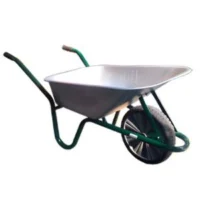 The Belle Limex demonstrates why the traditional wheelbarrow remains so useful. Its 100-litre galvanised steel tray provides generous space for soil, compost, rubble and garden waste.
At 11.9 kg, it remains manageable during repeated jobs, while the puncture-proof tyre combines useful shock absorption with freedom from flat tyres. This makes it a practical choice for regular gardening, property maintenance and construction work across varied surfaces.
Discover more about the Belle Limex 100L Capacity Wheelbarrow here.
Cobra GCT320HD Hand Trolley: More Capacity Without an Engine
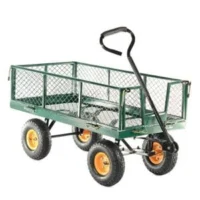 For substantially heavier loads, the Cobra GCT320HD combines a 320 kg capacity with four 13-inch pneumatic tyres. Its removable, hinged mesh sides make it adaptable to bulky loads, while turntable steering aids manoeuvrability.
Importantly, this trolley can be pulled by hand or towed, giving users greater flexibility as their requirements change. It suits larger gardens, landscaping jobs and other situations where the capacity of a conventional wheelbarrow may prove restrictive.
Take a closer look at the Cobra GCT320HD Hand Trolley here.
SCH GWTS15 Trailer: Heavy-Duty Transport for Larger Properties
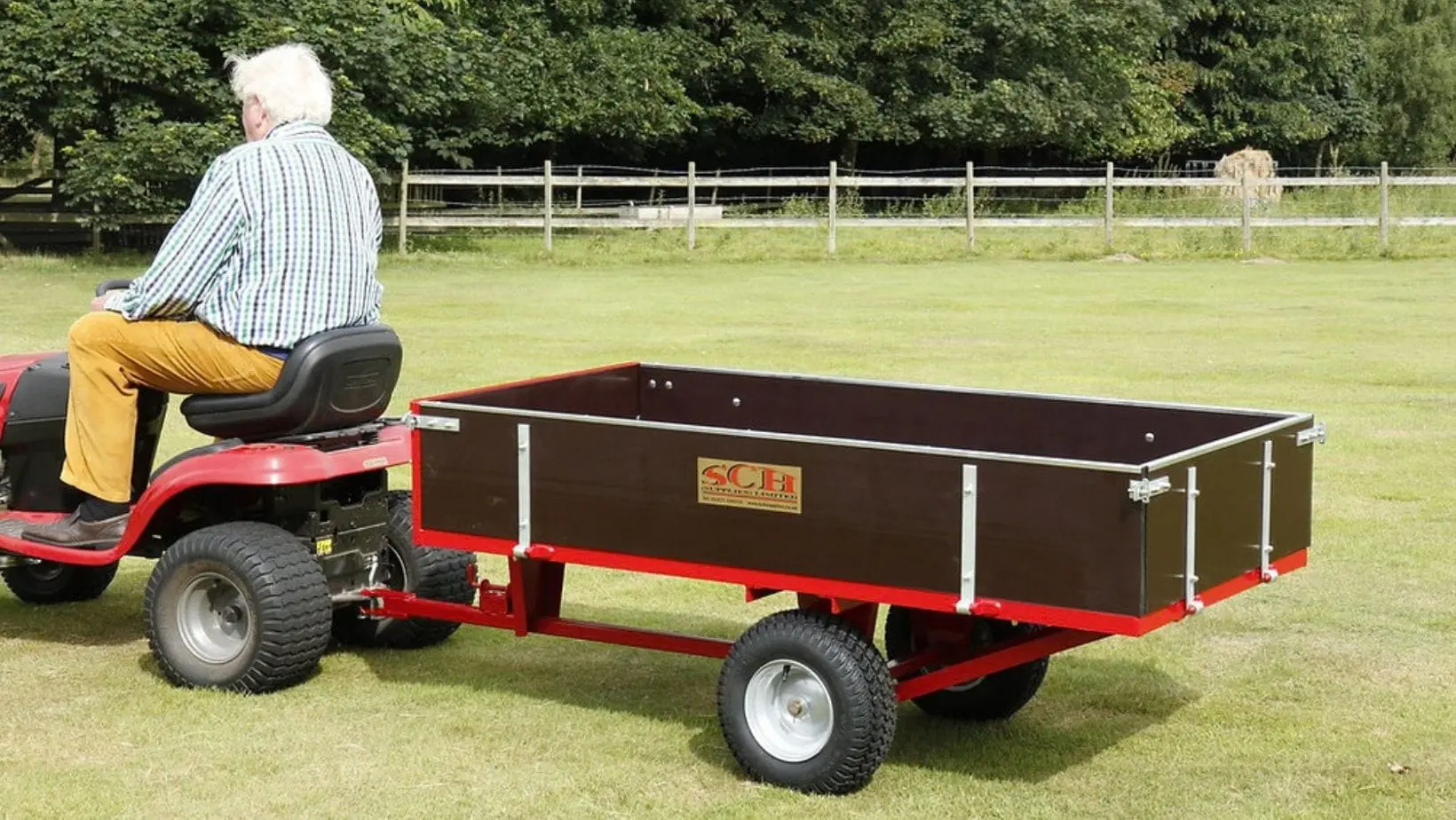
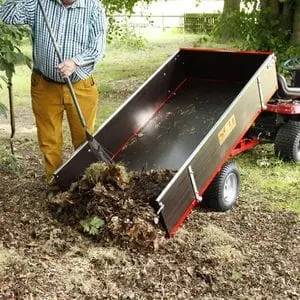
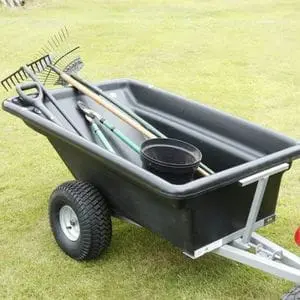
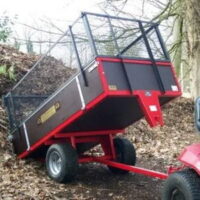 The Suffolk-built SCH GWTS15 is designed for demanding work behind a compatible garden tractor or ATV. Its 760 kg carrying capacity suits substantial loads, while removable sides allow conversion into a platform for awkward items.
A tipping action assists unloading, and wide-profile wheels help distribute weight to protect softer surfaces. For estates, paddocks and extensive gardens, this model perfectly demonstrates the productivity available from a dedicated tow-behind trailer.
Explore the SCH GWTS15 Trailer in greater detail here.
Bluebird WB 500 E Electric Power Barrow: Powered Help for Professional Work
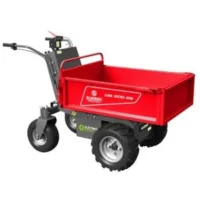 Frequent heavy transport may justify moving beyond manual equipment altogether. The Bluebird WB 500 E carries up to 500 kg and uses a 48 V battery system to reduce operator effort.
Its extendable box body accommodates varied materials and can accept a Euro pallet when extended. Gas-strut-assisted tipping simplifies unloading, while an 8-to-10-hour runtime on a single charge is suitable for demanding professional work.
Learn more about the Bluebird WB 500 E Electric Power Barrow here.
When Does a Garden Tractor Trailer Make Sense?
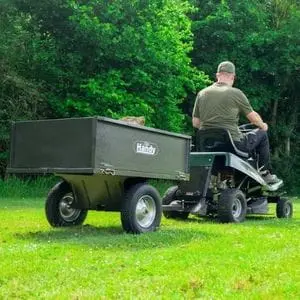 If you already own a compatible ride-on mower, garden tractor or ATV, tow-behind equipment deserves serious consideration.
A garden tractor trailer transfers both the load and the effort of moving it to machinery designed for powered travel. This becomes particularly valuable over longer distances. Instead of repeatedly pushing a loaded barrow across an estate, you can transport much greater quantities in each journey.
When choosing a garden trailer for ride on mowers, compatibility is essential. Check the towing arrangements and suitability of both machines rather than assuming every combination will work together.
It’s worth remembering that a lawn tractor garden trailer also needs room to turn. Narrow gates, tight paths and heavily planted gardens may favour smaller equipment, even when the property itself is relatively large.
When Is a Powered Barrow Worth Considering?
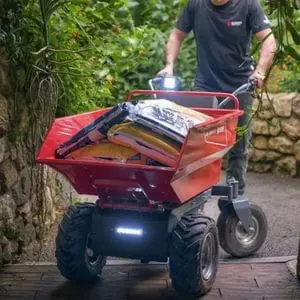
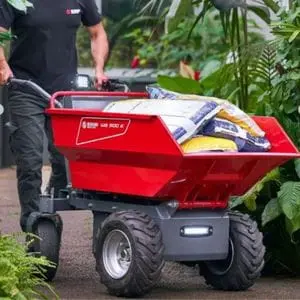 A power barrow occupies an interesting position between manual carts and trailer garden tractor combinations. It provides powered assistance without requiring a separate tractor or ATV.
That distinction makes it especially relevant to landscapers and other professional users. Heavy materials can be moved without the operator supplying all the propulsion, yet the machine remains independent of another towing vehicle.
Frequency of use is crucial here. For occasional domestic jobs, powered equipment may offer more capability than necessary. On a busy site where hundreds of kilograms of material need to be moved repeatedly, reducing physical effort could have a substantial impact on productivity.
A powered barrow may also make sense where a tractor and trailer would be too large. This illustrates why both site access and workload should always be considered alongside headline capacity.
Which Transport Solution Suits Your Garden?
 For smaller domestic gardens and occasional jobs, a traditional wheelbarrow is often the natural starting point. It is versatile, manoeuvrable and well suited to everyday materials such as compost, soil and garden waste.
A specialist cart becomes attractive when one task dominates. If you regularly move firewood, for example, a dedicated log cart may offer greater convenience than a general-purpose alternative.
Larger hand carts and trolleys bridge the gap between wheelbarrows and powered equipment. They provide increased capacity while retaining the simplicity of manual operation. Four-wheel designs may be particularly useful when the load itself is heavy or bulky.
Owners of large gardens, estates and paddocks may find a garden tractor and trailer combination far more efficient, especially where long transport distances are involved. Meanwhile, professional users facing intensive daily workloads have strong reasons to consider powered barrows.
Ultimately, the most suitable choice is the one that matches the material, terrain, access, distance and frequency of use. Those factors matter far more than finding a single product that claims to do everything.
Find the Right Transport Solution at Ron Smith & Co
 From traditional wheelbarrows and specialist carts to substantial tipping trailers and powered transporters, Ron Smith & Co offers solutions for a wide range of gardens, estates and professional sites.
Browse our comprehensive Trailers & Wheelbarrows category to compare equipment for moving logs, compost, soil, garden waste, tools and landscaping materials. Whether you need a straightforward manual barrow, a versatile trolley or a heavy-duty trailer, we provide options for very different workloads.
Still deciding which design suits your property? Our friendly and knowledgeable team is always on hand to offer expert advice. We can help you consider capacity, terrain, access and intended use so you can choose a transport solution that genuinely meets your needs.