If your lawnmower is leaving grass clumps, the cause is usually wet grass, a blunt blade, a dirty deck, or poor mowing technique. Discover 10 simple ways to improve grass collection and prevent clumping for more efficient mowing and a cleaner, healthier lawn.
Our Top 10 Tips to Prevent Lawnmowers Leaving Grass Clumps
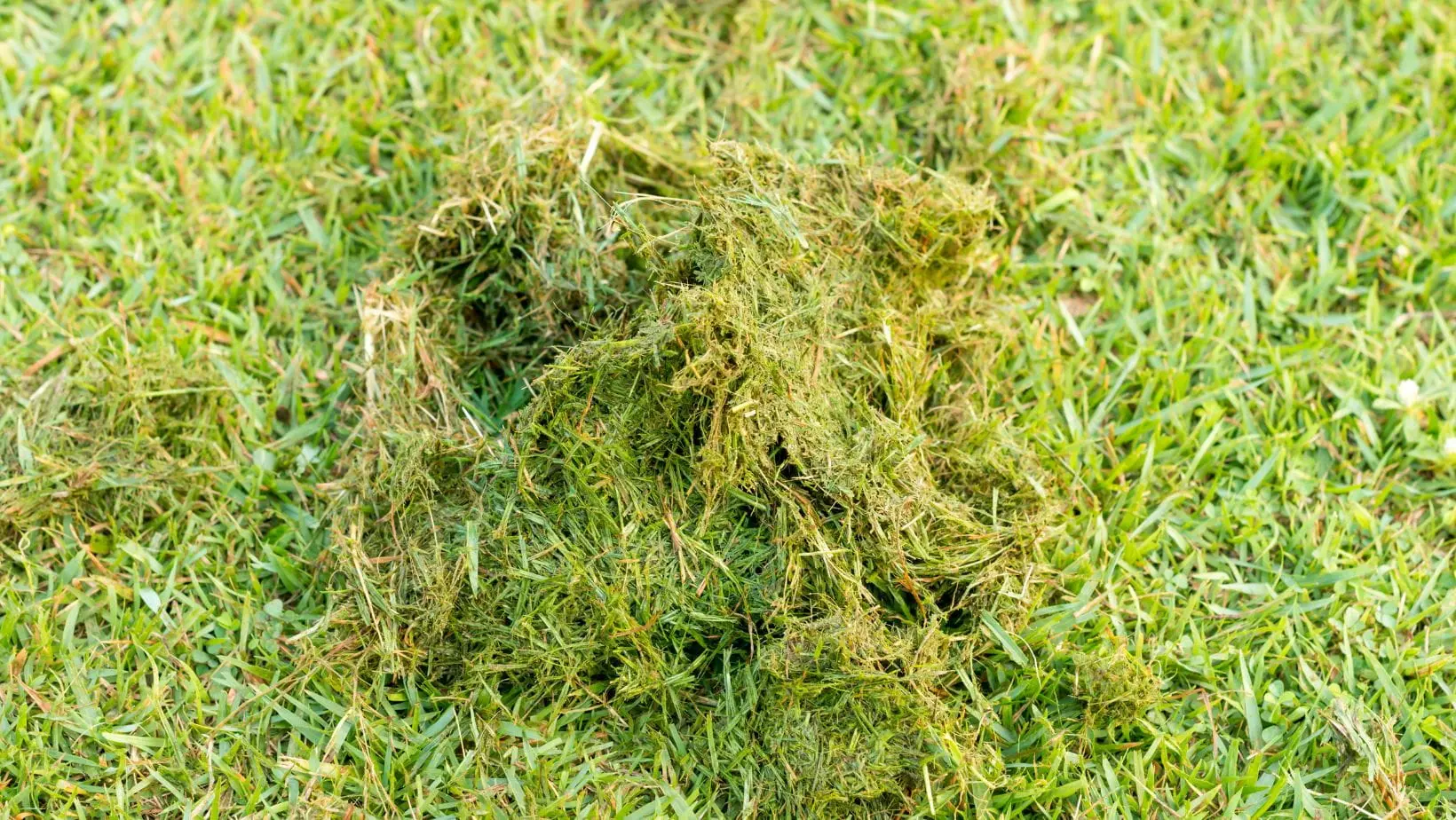
Few things spoil the appearance of a freshly cut lawn more quickly than untidy piles of grass scattered across the surface. If your lawn mower leaves clumps of grass, it can make even a well-maintained garden look neglected, while also creating conditions that encourage moss, disease, and patchy growth.
The good news is that this is usually a problem with a straightforward solution. In most cases, grass clumps after mowing are caused by poor mowing technique, weather conditions, or a machine that needs a little maintenance. And, just occasionally, they might indicate that your lawnmower has reached the end of its lifespan.
In this guide, we’ll explain the most common reasons why a mower leaves clippings behind and share our top ten tips for achieving a cleaner, healthier finish every time you cut your lawn. So, if you’ve been searching online ‘why my lawn mower leaves clumps of grass’, please read on to find the answer…
1) Wait Until the Grass Is Dry
 One of the biggest causes of grass clumps is mowing when the lawn is damp.
Morning dew, recent rainfall, or heavy humidity all make grass blades stick together. Instead of flowing smoothly through the cutting deck into the collector, wet clippings bunch together and fall back onto the lawn in large clumps.
If your lawn mower won’t collect grass after rain, the weather is often the culprit rather than the machine itself.
So, whenever possible, wait until the lawn has dried before mowing. The grass will stand more upright, cut more cleanly, and travel far more easily into the collection bag.
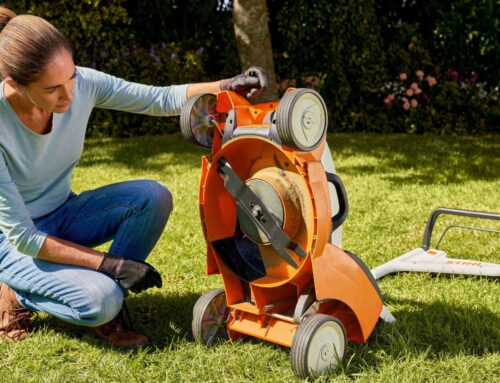
2) Keep the Deck Clean
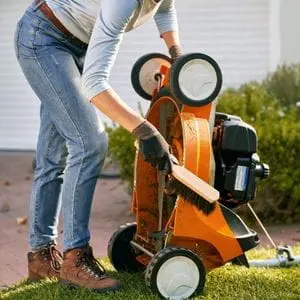 Even a high-quality lawnmower cannot collect grass efficiently if the underside of the deck is coated with old clippings.
As grass builds up around the blade housing, it restricts airflow. Modern rotary mowers rely on carefully directed airflow to lift grass upright before cutting it and then propel the clippings into the collector. Once this airflow is disrupted, collection performance suffers.
If your lawn mower not collecting grass has become a problem, simply removing built-up debris often restores normal operation.
By removing dried grass, this also helps reduce corrosion and prolongs the life of the machine.
3) Sharpen or Replace the Blade
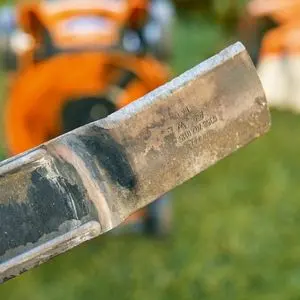 A sharp cutting blade slices cleanly through each blade of grass.
A blunt blade tears rather than cuts, producing ragged clippings that are harder for the mower’s airflow system to carry into the collection bag. Torn grass also loses moisture more quickly and can leave the lawn looking brown around the tips.
If your lawn mower won’t pick up grass, inspect the blade before assuming there’s a more serious fault.
The average home gardener benefits from sharpening their mower blade at least once a season, while those with larger lawns and professionals will need to do so more frequently.
If your lawnmower blade becomes bent, chipped, or excessively worn, then it’s time to replace it.
4) Empty the Grass Collector Before It Becomes Full
 An overfilled grass collector quickly loses efficiency.
As the bag fills, airflow through the fabric or plastic housing reduces dramatically. Eventually there is nowhere for fresh clippings to go, causing them to fall back onto the lawn instead.
Many gardeners think their lawn mower bag not collecting grass indicates a mechanical problem when, in reality, the collector simply needs emptying more often.
Empty the grass box before it becomes completely full, particularly when cutting lush spring growth. This helps maintain strong airflow and consistent collection throughout your mowing sessions.
5) Adjust the Cutting Height to Avoid Removing Too Much at Once
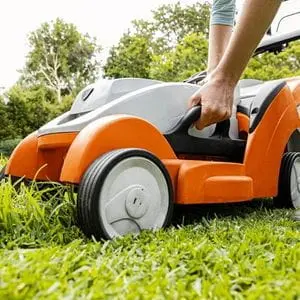 One of the most effective ways to prevent clumping is to avoid cutting excessive amounts of grass in a single pass.
Trying to reduce very long grass down to a neat finish places enormous demands on the mower. Large volumes of clippings overwhelm the cutting deck and collector, resulting in untidy piles across the lawn.
As a general rule, never remove more than around one-third of the grass height during a single cut. If your lawn has become overgrown, gradually reduce the height over two or three mowing sessions.
This simple approach greatly reduces the chances that your mower leaves clumps of grass, while also helping maintain healthier turf.
6) Check That the Grass Collector Is Working Properly
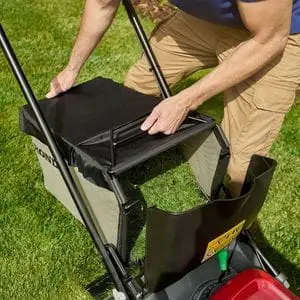 Sometimes the collector itself is responsible for poor performance.
If your lawn mower not collecting grass in bag continues to be a problem, despite a clean deck and sharp blade, the collector may need attention.
Inspect fabric bags for blockages, excessive wear, or clogged ventilation panels. Plastic collectors should also be checked for cracks or damage that could affect airflow.
Ensuring every component fits securely helps maintain the airflow needed to transport clippings efficiently from the blade into the bag.
7) Use the Correct Blade for the Job
 Not every lawnmower blade performs the same task.
Collection blades are designed to create strong upward airflow that lifts grass and throws clippings into the collector. Mulching blades work differently by recirculating clippings beneath the deck until they are finely chopped.
Problems often arise when mulching equipment is used incorrectly. If your mulching lawn mower leaves clumps, it’s usually a result of cutting wet or excessively long grass.
Mulching delivers excellent results when you mow little and often. However, if the lawn has grown too long, temporarily switching back to collection mode should produce a much tidier finish than when a mulching mower leaves clumps of grass.
8) Mow at the Right Speed
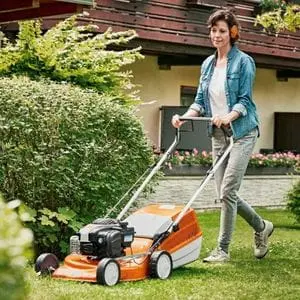 Walking too quickly can reduce collection performance.
A lawnmower needs enough time to generate airflow, lift the grass, cut it cleanly, and move the clippings into the collector. Moving too fast overwhelms this process, particularly in thick grass.
If your lawn mower does not collect grass consistently, slowing your pace may solve the problem immediately.
Many self-propelled mowers feature adjustable drive speeds, allowing you to match forward speed to the density of the grass you’re cutting.
9) Service Your Mower Regularly
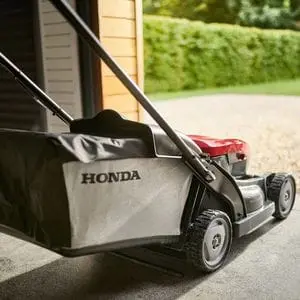 Routine maintenance keeps every part of the lawnmower operating efficiently.
A professional service typically includes blade inspection, belt checks where applicable, lubrication, air filter inspection or cleaning, spark plug replacement on petrol models, and general adjustment of moving components.
These checks not only improve reliability but also maintain cutting performance throughout the mowing season.
If you consistently have a problem with your mower not collecting grass, a thorough service could restore the machine to its best.
Preventative maintenance is almost always cheaper than waiting until components fail.
10) Replace a Mower That’s Past Its Best
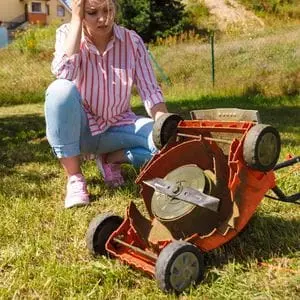 Even the best lawnmowers eventually reach the point where repairs become less economical than replacement.
Years of use can lead to worn decks, weakened airflow, tired engines or motors, and numerous small issues that together reduce collection performance.
If you’ve cleaned the deck, sharpened the blade, serviced the machine, and still find your lawn mower leaves clumps of grass, it may simply be time for an upgrade.
Modern petrol, battery-powered, and electric lawnmowers feature improved deck designs, more efficient airflow, larger collectors, and advanced blade technology that delivers noticeably cleaner collection.
Investing in a new machine can save time, improve the appearance of your lawn, and make mowing far more enjoyable.
Say Goodbye to Grass Clumps with Ron Smith & Co
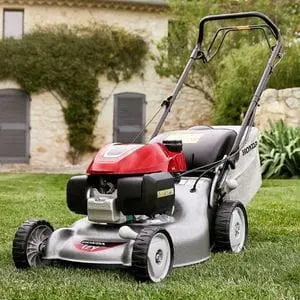 If you’ve been wondering how to get rid of clumps of grass after mowing, following the advice in this guide should help you achieve a much cleaner finish. In many cases, a few simple maintenance checks and small changes to your mowing routine are all that’s needed to eliminate unsightly clippings.
However, if your current machine is no longer performing as it should, upgrading to a modern lawn mower could make all the difference. At Ron Smith & Co, we’re proud to be Britain’s number one supplier of lawnmowers, offering one of the country’s widest selections of petrol, battery-powered, electric, robotic, and ride-on machines from the world’s leading manufacturers.
What’s more, our friendly and knowledgeable team is always on hand to provide expert advice, whether you need help choosing a new lawnmower or want further guidance on how to get rid of grass clumps after mowing.
With the right equipment and expert support, you can enjoy cleaner mowing and a healthier lawn throughout the growing season.