Choosing between high-dump and low-dump grass collectors depends on more than the size of your grounds. High dump is particularly useful when clippings need loading into trailers or containers, while low dump remains highly practical for convenient on-site disposal. Our guide explains which system best suits different largescale mowing requirements.
High Dump vs Low Dump Grass Collectors for Large Grounds
When choosing a ride-on mower for large grounds, cutting width and engine power often receive most of the attention. Yet, if you plan to collect your grass clippings, another feature can have a major influence on productivity: how the collector empties.
Ride-on and tractor mowers with grass collectors generally use either a low-dump or high-dump system. Both can work extremely well across substantial areas, but they suit different approaches to grass disposal.
A high-dump collector offers clear advantages when clippings need to be transferred into a trailer or container. However, that does not mean a low-dump mower is unsuitable for large grounds. Where grass can be tipped conveniently at ground level, the simpler system may make perfect sense.
So, when comparing high-dump and low-dump ride-on mowers, the important question is not simply how much land you have. You also need to consider what happens to the grass once it has been cut.
What Is a Low-Dump Grass Collector?
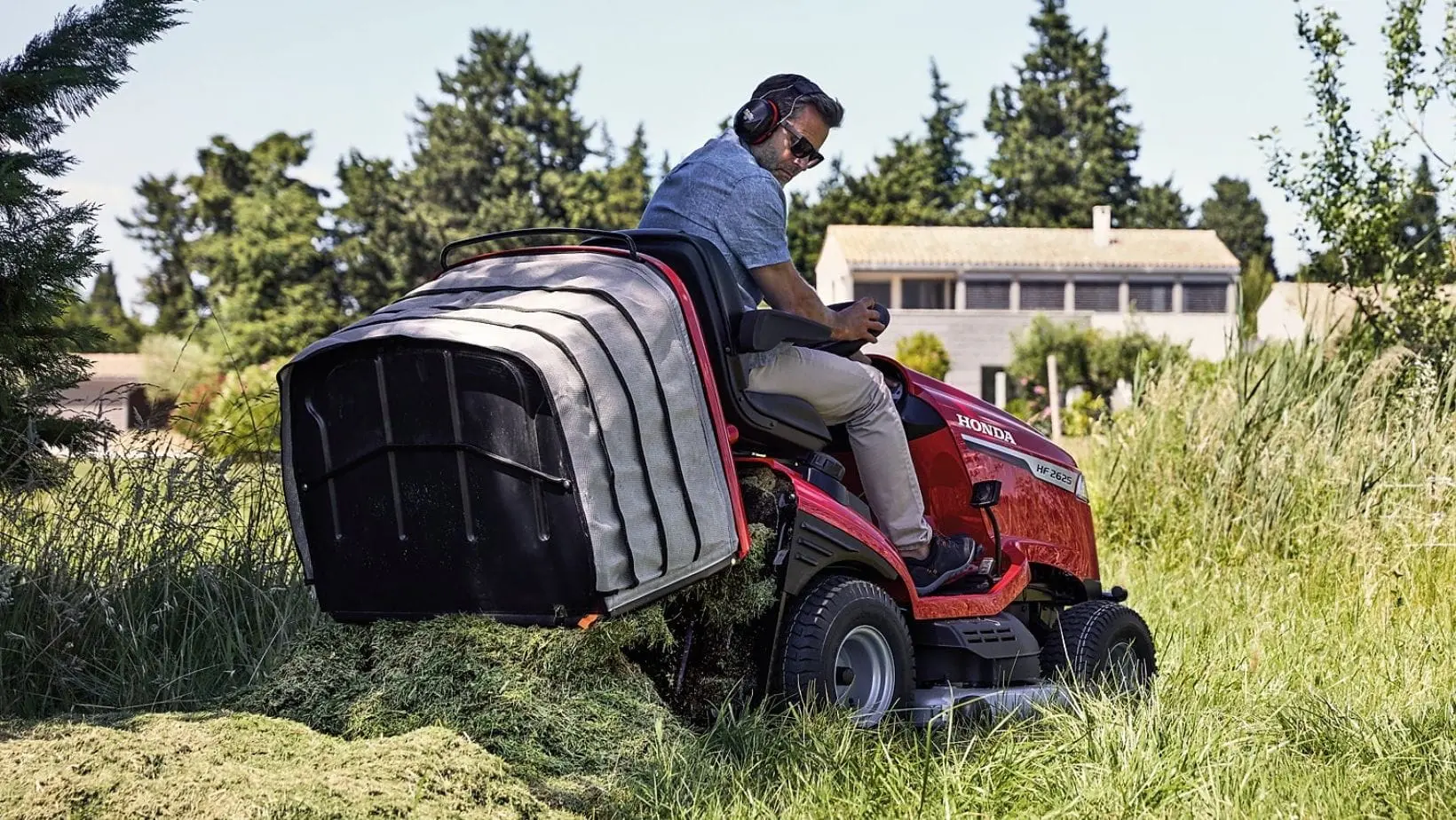
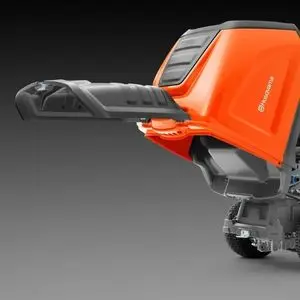 A low-dump collector is designed to discharge grass clippings close to ground level. Depending on the mower, the hopper may be emptied hydraulically or through another tipping mechanism controlled from the operator’s position.
This arrangement is straightforward and practical. The operator can drive to a suitable disposal area, empty the collector and return to mowing.
For large private gardens, estates and other extensive grounds, this approach can work very well. If there is a composting area or designated place for clippings nearby, there may be little reason to lift the material any higher.
The suitability of a low-dump collector therefore depends heavily on how the site is organised.
How Does a High-Dump Collector Differ?
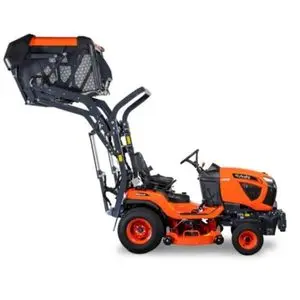 A high-dump ride-on mower takes the collection process a stage further. Instead of only tipping the hopper near ground level, it can raise the collector before discharging its contents.
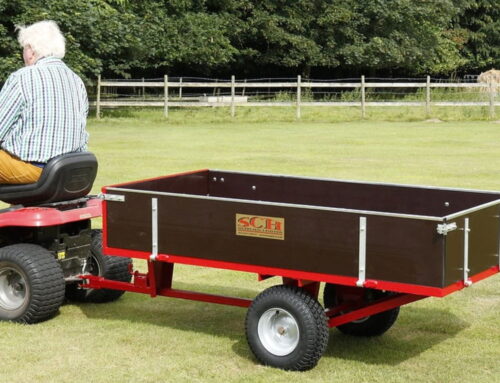
This allows grass clippings to be tipped directly into a trailer, skip or suitable container, subject to the machine’s discharge height and reach.
That capability can transform the way clippings are handled on a large site. Rather than creating piles that later need to be collected, the operator can transfer the material directly into the vehicle or container used to take it away.
The benefit is therefore less about mowing the grass and more about improving the overall working process.
Why High Dump Can Be Valuable on Large Grounds
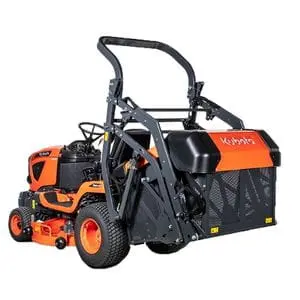 The larger the mowing area, the greater the potential volume of grass that must be dealt with. This becomes particularly noticeable during periods of strong growth, when a collector can fill quickly.
If every hopper load is emptied onto the ground, those clippings may eventually need to be handled again. Someone must load them into a trailer, transport them elsewhere or otherwise dispose of them.
A high-dump grass collector can remove this additional stage.
For professional grounds teams, contractors and estate workers, that can represent a worthwhile improvement in productivity. The mower can travel to a waiting trailer or container, raise its collector, discharge the load and return to work.
Over the course of a long mowing session, reducing repeated manual handling can save both time and effort.
Large Grounds Do Not Automatically Require High Dump
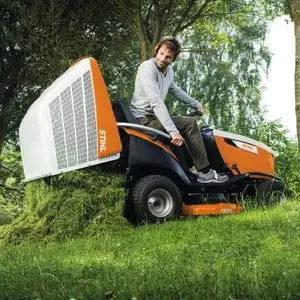 It is easy to assume that a high-dump ride-on mower is always the natural choice for larger properties. In practice, the decision is more nuanced.
Consider an estate where several convenient grass disposal points are positioned around the grounds. A low-dump mower could simply empty at the nearest location without travelling far from its mowing route.
The same principle may apply where clippings are composted on site. If the mower can drive directly to the composting area, raising the collector to trailer height may offer little practical advantage.
This is why acreage alone should not determine your choice.
A large site with an efficient ground-level disposal system may suit a low-dump collector perfectly. Conversely, a smaller commercial site where all clippings must be transported elsewhere could benefit considerably from high dump.
Think About the Complete Mowing Cycle
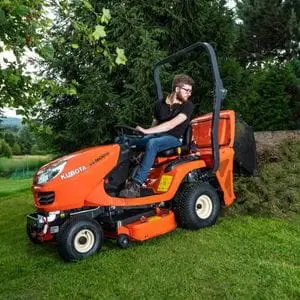 When comparing ride-on mowers for large grounds, it helps to look beyond the time spent actually cutting grass.
A mowing job includes travelling around the site, filling the collector, reaching a disposal point, emptying it and returning to the area being cut. If the grass then needs moving again, that becomes part of the total workload too.
This wider perspective can reveal the real benefit of a high-dump system.
Suppose two machines offer similar cutting performance and collector capacities. If one can discharge straight into a trailer while the other creates piles that need loading later, their overall productivity may be quite different.
However, if the low-dump machine can empty directly where the clippings are ultimately required, that additional handling disappears. In those circumstances, high dump may offer much less of an advantage.
The most efficient mower is therefore the one that fits the entire working process, rather than simply the machine with the most sophisticated collector.
Collector Capacity Matters Too
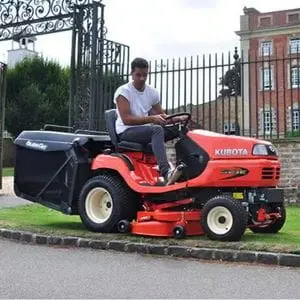 The way a collector empties is only part of the equation. Its capacity can be equally important when mowing extensive grassy areas.
A larger hopper can allow the operator to mow for longer before stopping. This can reduce the number of journeys to disposal areas and improve productivity across open grounds.
The effectiveness of the collection system also matters. Damp or long grass can be more challenging to collect than short, dry clippings. A mower designed to move cut material efficiently into its hopper can therefore offer advantages during demanding conditions.
When choosing a ride-on lawn mower with a grass collector, consider capacity, collection performance and emptying method together. Focusing on just one specification may give an incomplete picture of how productive the machine will actually be.
Consider the Distance to Your Disposal Point
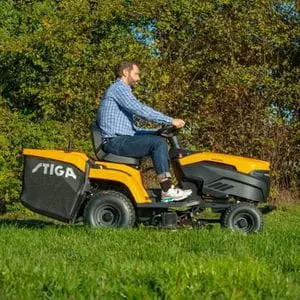 The layout of the grounds can have a surprisingly large influence on the best collector system.
Imagine a large property with one central composting area. A mower working at the far end of the site may need to travel a considerable distance every time its hopper fills. In this situation, collector capacity and travel time could be more important than whether the machine offers high dump.
Now consider grounds where clippings are removed using a large trailer positioned close to the mowing area. A high-dump collector could empty directly into it, making disposal considerably more streamlined.
Thinking about where the grass goes, how far the mower must travel and how frequently the collector is likely to fill can help identify the most efficient setup.
When Does Low Dump Make the Most Sense?
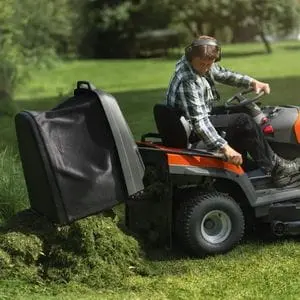 A low-dump ride-on mower can be an excellent choice when grass can remain on the property and suitable disposal areas are readily accessible.
It may suit private estates, large gardens and grounds where clippings are composted or accumulated in designated areas. The operator can empty the hopper directly at the required location without introducing another stage into the process.
Low dump can also appeal to buyers who simply do not need the additional capability of a lifting collector. Choosing machinery around genuine requirements, rather than features that may rarely be used, is usually the more sensible approach.
For many large grounds, a good low-dump collector remains a highly practical solution.
When Is High Dump Worth Choosing?
High dump becomes particularly attractive when collected material needs to be transferred into another vehicle or container.
Schools, parks, estates, sports facilities and commercial grounds may generate substantial quantities of grass. If those clippings need removing from the mowing area, directly loading them into a trailer can significantly simplify the job.
It can also reduce manual handling. Instead of moving piles of cut grass separately, the mower itself completes much of the loading process.
This benefit becomes increasingly valuable when collection is carried out regularly across the growing season. Saving a few minutes on an individual hopper load can translate into much greater efficiencies over many hours of work.
Do Not Choose a Mower on Its Collector Alone
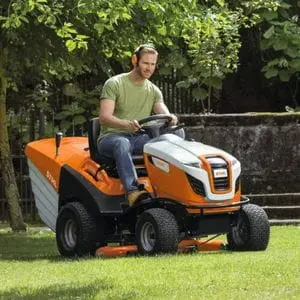 Collector design matters, but it should never be considered in isolation.
For extensive grounds, cutting width has a major bearing on how quickly open areas can be covered. Manoeuvrability becomes important around trees, paths, furniture and landscaped features. Engine performance, transmission, traction and operator comfort may also affect how suitable a machine is for long working days.
The terrain must be considered too. Slopes, uneven ground, confined areas and sensitive turf can all influence which riding mower is appropriate.
A high-dump system cannot compensate for a mower that is otherwise poorly matched to the property. Equally, an excellent low-dump machine should not be dismissed simply because another model can raise its hopper.
The objective is to find the mower whose complete specification suits the grounds and the work expected of it.
High Dump or Low Dump: Which Should You Choose?
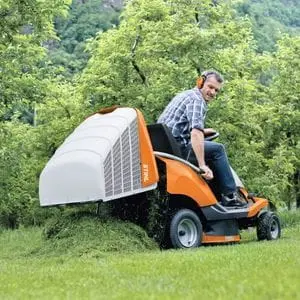 For large grounds where collected grass needs to be loaded into a trailer, skip or similar container, high dump will often be the more efficient option. It streamlines disposal, reduces repeated handling and can make a busy mowing schedule easier to manage.
Where clippings can be tipped directly onto a compost heap or at convenient collection points, low dump remains extremely practical. In these circumstances, the additional lifting ability of a high-dump collector may provide little benefit.
Before deciding, consider the route your clippings take from lawn to final disposal. That simple question often tells you more than the size of the grounds alone.
Find the Right Ride-On Mower at Ron Smith & Co
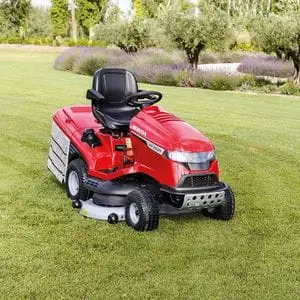 Choosing the right ride-on or tractor mower for large grounds involves much more than comparing high-dump and low-dump grass collectors. The best machine should suit your mowing area, terrain, workload and preferred method of handling clippings.
Ron Smith & Co is Britain’s premier retailer of ride-on and tractor mowers, with an outstanding selection of machines for domestic, estate and professional groundcare applications.
Whether you need a high-dump mower for efficient trailer loading or a dependable low-dump machine for on-site grass disposal, our friendly staff are always on hand to offer expert advice. We can help you compare the options and choose the best machine for your grounds, so you can invest in your next ride-on or tractor mower with confidence.