If your lawn mower is cutting unevenly, check for blunt blades, incorrect tyre pressures, poor deck adjustment, clogged grass, damaged components, wheel or tyre problems, and difficult mowing conditions. Simple maintenance can often restore a clean cut, but persistent vibration, component damage, or alignment problems may require professional servicing.
7 Reasons Why Your Lawn Mower Is Cutting Unevenly
Few things are more frustrating than mowing the lawn only to discover that the finished surface looks worse than expected. Instead of a neat, consistent cut, you might see strips of longer grass, ridges between passes, or patches that appear noticeably higher than others.
If your lawn mower is cutting unevenly, there is usually an identifiable reason. In many cases, the problem can be traced to the blades, cutting deck, wheels, or mowing conditions. Some faults are straightforward to correct at home, while others may require professional attention.
So, why is my lawn mower cutting unevenly? Here are seven of the most common causes, along with the checks that can help you restore a cleaner finish.
1) Blunt Lawn Mower Blades
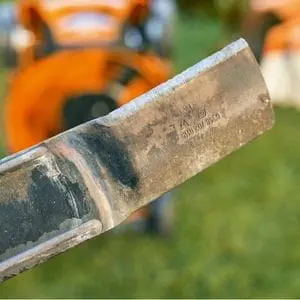 The cutting blade is the obvious place to start. A sharp rotary blade slices through grass cleanly as the mower travels forwards. As its cutting edges become blunt, however, performance can deteriorate.
Rather than producing a crisp cut, a dull blade may tear or batter the grass. Some blades can also become worn unevenly, particularly after repeated contact with stones, exposed roots, or other debris. The result may be uneven cut grass and an untidy appearance.
If you notice lawn mower blades cutting unevenly, inspect them carefully with the machine safely switched off and unable to start. Look for excessive wear, chips, dents, bent sections, or other visible damage. Grass with frayed or ragged tips can also indicate that the blade needs attention.
A blade that is simply blunt may be suitable for sharpening, provided it remains in good condition. Correct balancing is important after sharpening. If too much material is removed from one side, an unbalanced blade can cause vibration and place extra strain on the mower. A badly damaged or heavily worn blade should normally be replaced.
2) Incorrect Tyre Pressures
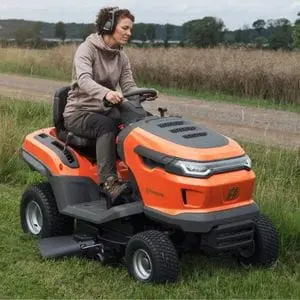 For ride-on mowers and lawn tractors, relatively small differences in tyre pressures can affect how the machine sits.
If one tyre contains significantly less air than its counterpart, that side of the mower may sit lower. The cutting deck then operates at a different angle to the lawn, even if the deck itself has previously been adjusted correctly.
This is a common factor to overlook when you notice a ride on mower cutting unevenly. Owners may start adjusting the deck immediately, only to find that the real problem is unequal tyre pressures.
Check each tyre against the pressures specified by the mower manufacturer. Do not assume that tyres which look similar contain the same pressure. A pressure gauge provides a far more reliable comparison.
Tyres should ideally be checked before making deck adjustments. Otherwise, you risk levelling the deck to compensate for incorrect tyre pressure.
If you’ve been asking yourself ‘why my riding lawn mower cuts unevenly’ from one side to the other, tyre pressure is therefore one of the simplest checks you can make before moving on to more involved adjustments.
3) Incorrect Cutting Deck Settings
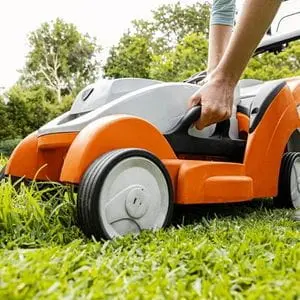 An uneven cutting deck can make an otherwise healthy mower leave a poor finish. The deck determines the position of the blade in relation to the lawn, so its adjustment has a direct influence on cutting height.
This is particularly important with ride-on mowers and lawn tractors. If one side of the deck sits lower than the other, the grass may be cut shorter on that side. This can produce visible lines or steps across the lawn after each pass.
If your lawn mower deck is cutting unevenly, check that its settings match the manufacturer’s recommendations. Depending on the machine, this may involve checking the deck from side to side as well as its front-to-rear position. Also make sure that the cutting height controls are correctly engaged.
The mower should be parked on a firm, level surface before measurements are taken. A deck that appears uneven while sitting on sloping or irregular ground can lead you towards the wrong diagnosis.
Deck levelling problems are amongst the first things worth investigating with a lawn tractor cutting unevenly. However, if the deck repeatedly loses its correct position, there may be an underlying component fault rather than a simple adjustment issue.
4) A Clogged Cutting Deck
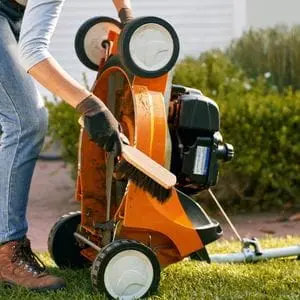 Grass clippings gradually accumulate beneath many mower decks, especially when conditions are damp. If this build-up becomes excessive, it can interfere with airflow and prevent the mower from processing grass as intended.
Rotary mower decks rely on carefully managed airflow as well as blade speed. This helps lift the grass towards the blade and then move the clippings away from the cutting area. Thick deposits of compacted grass can disrupt this process.
The problem can be particularly noticeable when mowing long or wet grass. Material may stick underneath the deck rather than being discharged or collected efficiently. This can contribute to a lawnmower cutting unevenly and may also leave clumps of cut grass behind.
Regular deck cleaning can therefore make a noticeable difference. Always follow the manufacturer’s safety and cleaning instructions before accessing the underside of a mower. Petrol machines should be handled carefully to avoid fuel or oil entering areas where they should not.
If your mower deck cuts unevenly despite having sharp blades and the correct adjustment, checking underneath for accumulated debris is a sensible next step.
5) Damaged or Worn Components
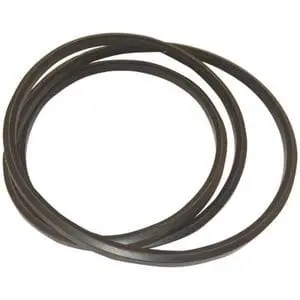 Sometimes the problem goes beyond routine adjustment. A mower can suffer wear or damage to parts that influence the position and movement of its cutting system.
A blade may become bent after striking a solid object. Spindles, bearings, deck hangers, linkages, belts, pulleys, or other components can also wear or become damaged, depending on the mower’s design. Even a relatively small change in blade position can affect the finished cut.
Unusual vibration is particularly worth investigating. If a mower suddenly starts vibrating after hitting a stone, stump, or hidden object, stop using it and inspect the machine before continuing. A bent blade or damaged rotating component should not be ignored.
Multi-blade decks introduce additional possibilities. For example, if you have a 3 blade mower cutting unevenly, one blade or spindle may be sitting differently from the others. A drive problem could also prevent the blades from performing consistently.
Damaged components are not always obvious from a quick visual inspection. If the mower has developed a poor cut suddenly, particularly after an impact, professional assessment may be the safest approach.
6) Wheel or Tyre Problems
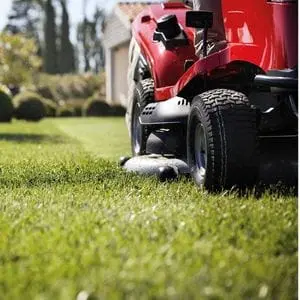 The wheels support the mower at a controlled height above the lawn. Anything that changes this relationship can influence how evenly the grass is cut.
On a pedestrian mower, inspect the wheels for damage, excessive wear, looseness, or incorrect positioning. A damaged wheel or worn mounting may allow one corner of the mower to sit lower than intended.
Wheel and tyre condition becomes even more important with larger ride-on machines. A damaged tyre, worn wheel bearing, or other running-gear problem can alter how the mower sits as it travels.
This is worth remembering if your ride on mower is cutting unevenly even though the deck itself appears correctly adjusted. The deck may have been set accurately, but problems elsewhere on the machine can still affect its relationship with the ground.
Wheel issues can also make a mower rock or move inconsistently across the lawn. On an already uneven surface, that movement can exaggerate variations in the finished height.
7) Difficult Grass or Ground Conditions
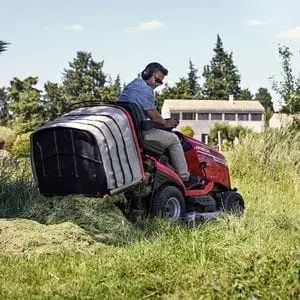 Not every uneven finish means that something is wrong with your mower. Sometimes the lawn itself is responsible.
Long, wet, flattened, or exceptionally thick grass is harder to cut consistently. Damp grass tends to bend and clump, while very long growth may be pushed over before the blade reaches it. The mower can therefore miss individual stems or leave patches at slightly different heights.
If possible, wait until the grass is reasonably dry before mowing. Very long grass is often better reduced gradually rather than being cut straight down to the desired height in one session. Taking off too much at once can place additional load on the mower and leave a poorer finish.
Uneven ground creates another challenge. Hollows, bumps, slopes, and soft areas change the mower’s position relative to the turf. A deck that is perfectly level on the workshop floor cannot remain the same distance from every part of an irregular lawn.
Mowing technique matters too. Overlap each pass sufficiently to prevent narrow strips being missed between runs. Changing mowing direction from time to time can also help where grass has developed a tendency to lean.
Before assuming there is a mechanical fault, consider the conditions in which the problem occurs. If the mower performs well on dry, manageable grass but struggles after heavy rain or during rapid spring growth, the conditions may be a major factor.
Diagnosing an Uneven Cut
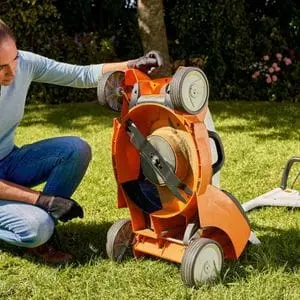 The appearance of the lawn can sometimes provide clues about the cause. Consistent ridges or steps between passes may point towards deck levelling, tyre pressure, or wheel problems. Ragged grass tips are more suggestive of blunt blades, while occasional missed stems can be associated with wet, flattened, or overgrown grass.
A sudden change is also significant. If your mower previously produced an excellent finish but begins cutting badly after hitting an object, mechanical damage becomes more likely. A gradual decline over many mowing sessions may instead suggest blade wear, accumulated debris, or components that have deteriorated with use.
Multi-blade machines require particular care when diagnosing the problem because all blades must work together. If one blade, spindle, or related component is out of position, the difference can become visible across the width of the deck.
Taking a methodical approach is usually better than immediately changing the deck settings. Start with simple factors such as grass conditions, blade condition, deck cleanliness, wheels, and tyre pressures. Adjustments should always follow the manufacturer’s instructions for your particular mower.
When Does an Unevenly Cutting Mower Need Professional Servicing?
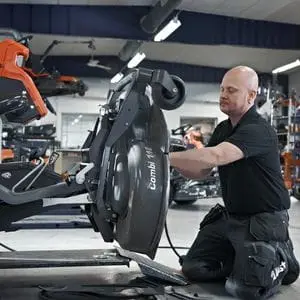 Some causes of an uneven cut can be dealt with through routine maintenance. Cleaning the deck, checking tyre pressures, inspecting the wheels, or replacing a worn blade may be within the capabilities of an experienced owner, provided the manufacturer’s instructions are followed.
Other problems are better left to trained technicians. Persistent vibration, damaged spindles, worn bearings, bent components, drive-system faults, or a deck that cannot be correctly aligned may require specialist inspection and repair.
Professional attention is also advisable when the cause remains unclear. Continually adjusting different parts in an attempt to compensate for an unidentified fault can create further problems.
Servicing can be valuable even when there is no obvious failure. A mower contains numerous components that work together to produce a consistent cut. Regular maintenance helps ensure the cutting system, drive components, engine or motor, wheels, controls, and other important parts continue to perform as intended.
If you find yourself repeatedly asking, ‘why is my lawn mower deck cutting unevenly?’, despite carrying out the basic checks, arranging an expert inspection can save considerable time and uncertainty.
Get Your Mower Cutting Cleanly Again
 A mower deck unevenly cutting does not necessarily mean that a major repair is required. Blunt blades, unequal tyre pressures, an incorrectly adjusted deck, accumulated grass, wheel problems, and unsuitable mowing conditions can all affect the finished result. More serious component damage can produce similar symptoms and may require professional attention.
Ron Smith & Co stocks a comprehensive range of spare rotary blades for lawnmowers, making it easier to replace blades that have become worn or damaged. Our useful Spare Parts Finder can help you identify the other parts required for your particular garden machine.
If the problem needs more than routine maintenance, we also provide comprehensive garden machinery servicing. Our experienced technicians service lawnmowers and a wide variety of other equipment, helping keep your machinery safe, reliable, and ready to deliver the standard of finish your lawn deserves.