Choosing the right disc cutter depends on what you need to cut, the required cutting depth, and where you’ll be working. This guide compares cordless and petrol machines, explains common disc sizes and cutting disc types, as well as highlighting three STIHL and Husqvarna cut off saws available from Ron Smith & Co.
How to Choose the Right Disc Cutter
From cutting paving slabs to tackling reinforced concrete, a disc cutter can make light work of materials that would be difficult to cut by other means. These powerful machines are widely used by builders, landscapers, groundworkers, and other trades. They can also prove invaluable for demanding DIY projects.
However, disc cutters vary considerably in size, power, and design. Choosing the right machine means thinking about what you intend to cut, how often you will use it, and where the work will take place. You will also need to choose between petrol and cordless power, as well as select the correct cutting disc.
In this guide, we explain the main differences between disc cutters and look at three machines that demonstrate the breadth of choice available at Ron Smith & Co.
What Is a Disc Cutter Used For?
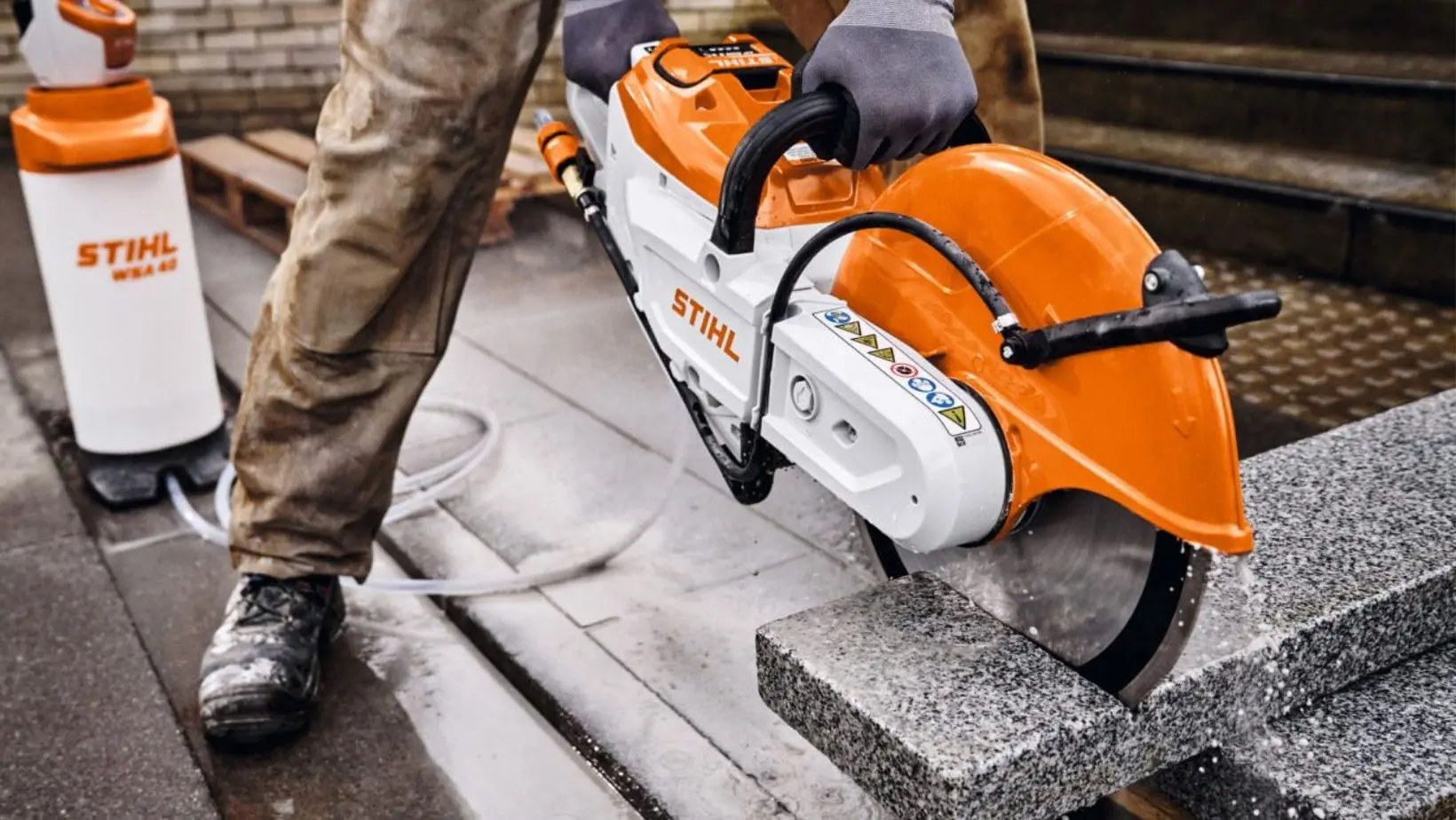
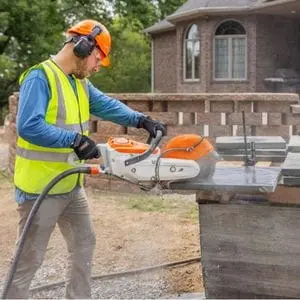 A disc cutter is a handheld power tool that uses a rapidly rotating cutting disc to slice through hard materials. You may also see these machines described as a cut off saw, power cutter, or concrete saw. The terminology varies between manufacturers and applications, but the basic principle remains much the same.
With an appropriate cutting disc fitted, cut off saws can tackle concrete, brick, block, stone, paving, asphalt, and metal. This versatility makes them useful for many construction and landscaping projects. For example, a masonry cutting saw might be used to resize blocks when building a wall, while a landscaper could use a stone cutting saw to achieve clean cuts when laying paving.
Larger professional machines can take on much more demanding jobs. They may be used to cut concrete structures, kerbstones, asphalt, pipes, and structural steel. Their portable design also means they can be taken directly to the workpiece, rather than bringing heavy materials to a stationary saw.
Before choosing a cut off saw, consider both the material and the depth of cut required. A compact cutter could be ideal for paving and lighter hardscaping, but larger projects may call for greater power and a bigger disc.
Cordless or Petrol Disc Cutter?
Power source is one of the first choices to make. Petrol machines have a long history in professional construction, while modern battery technology has made the cordless disc cutter an increasingly capable alternative. Neither is automatically better for every user, so your working environment, workload, and access to power should guide your decision.
Petrol Disc Cutters
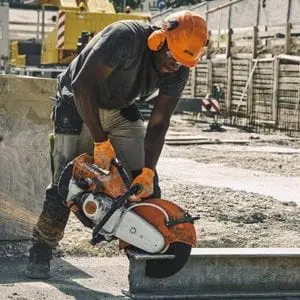 A petrol disc cutter provides excellent mobility because it does not depend on battery charge or an electrical supply. Provided you have sufficient fuel available, you can keep working in locations far from mains electricity. Larger petrol models can also deliver the high power required for substantial cutting jobs. This helps explain their continued popularity in construction, roadwork, groundworks, and other demanding applications.
The trade-off is that petrol engines require fuel and regular maintenance. They also produce exhaust emissions and tend to create more engine noise. Starting procedures and engine servicing are further considerations, although modern professional machines include technology designed to make both easier.
Battery Powered Disc Cutters
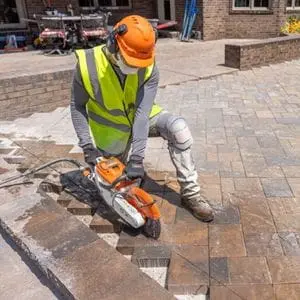 Cordless disc cutters offer a different set of advantages. There is no fuel mixture to prepare, no pull-starting procedure, and no trailing electrical cable. They also produce no exhaust emissions at the point of use. This can make cordless cutters especially useful where petrol exhaust fumes would be undesirable. Suitable dust control and ventilation remain essential when cutting materials that generate hazardous dust.
Battery machines can also be quieter and simpler to maintain than petrol equivalents. Professional cordless technology has advanced considerably, with powerful machines now available for jobs that were once largely the preserve of petrol equipment.
Runtime still deserves consideration, but owning several compatible batteries can greatly reduce interruptions. While one battery powers the cut off saw, charged spares can be kept ready for the next changeover. For remote work, suitable portable power banks or mobile charging solutions can provide another option, reducing reliance on a nearby mains connection. This means professional users can plan their battery supply around the working day rather than necessarily stopping whenever one battery becomes depleted.
Existing battery ownership can make cordless disk cutters particularly attractive. Choosing a compatible machine may allow batteries and chargers to be shared with other professional tools from the same system. For users already invested in a suitable battery platform, this can make a cordless disc cutter a highly practical choice.
What Are the Most Common Disc Cutter Sizes?
Disc diameter affects both the physical size of the machine and how deeply it can cut. Amongst handheld cutters, 9″ (230 mm), 12″ (300 mm), and 14″ (350 mm) are three particularly common sizes. Larger 16″ (400 mm) professional machines are also available for demanding work.
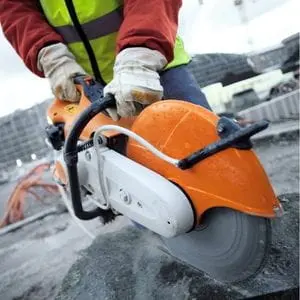 A 9″ (230 mm) cutter is relatively compact and manoeuvrable. This can make it a good choice for lighter construction and landscaping jobs where extreme cutting depth is unnecessary. The smaller format can also reduce machine weight, which is useful when accurate handling is a priority.
Moving up to 12″ (300 mm) provides greater cutting capacity while retaining a manageable handheld format. This size is well suited to a broad range of professional applications involving materials such as concrete, masonry, stone, and steel, subject to the disc fitted.
A 14″ (350 mm) machine takes cutting capacity further and is a familiar choice for demanding construction and groundworks. At the upper end of the scale, a 16″ (400 mm) disc cutter provides substantial cutting depth for heavy-duty applications.
Remember that disc diameter and maximum cutting depth are not the same measurement. A 12″ disc cannot make a 12″ deep cut because only part of its radius can enter the material. Always check the manufacturer’s stated maximum cutting depth rather than judging capability from disc diameter alone.
Choosing the Right Disc Cutter Blades
Selecting the machine is only part of the process. Different disc cutter blades are designed to work with different materials, so the correct disc is essential for effective and safe cutting.
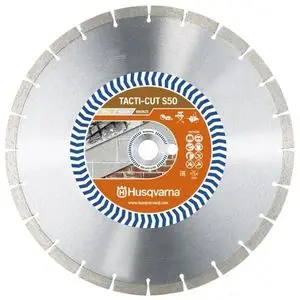 Diamond discs are widely used for construction materials. Industrial diamond forms part of the cutting edge, allowing the disc to work through hard surfaces such as concrete, brick, paving, and stone. However, not every diamond disc is intended for exactly the same application. Some are optimised for particular materials, so it is important to check their intended use.
Abrasive cutting discs are another common choice. These gradually wear as they cut and are available in versions intended for materials such as masonry or metal. Dedicated metal-cutting discs can be used for steel and similar materials, while suitable specialist diamond products are available for some metal applications.
Asphalt presents its own demands because it is highly abrasive. Diamond discs intended for asphalt are designed to cope with these conditions. Multi-material discs are another option when several different materials need to be cut during the same job.
Disc construction can vary too. Segmented diamond discs have spaces between their cutting segments, aiding cooling and the removal of debris. Other designs prioritise a finer finish where reducing chipping is important.
Whichever type you choose, compatibility goes beyond diameter. The disc must be suitable for the material, machine, bore size, and maximum operating speed. Manufacturer guidance should always be followed.
Other Features Worth Considering
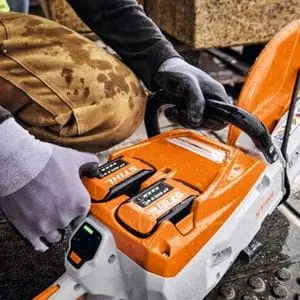 Once you’ve narrowed your choice by power source, disc cutter size, and disc type, it’s worth looking at the details that affect day-to-day operation. Weight and balance are particularly important with a handheld machine. A lighter cutter can reduce the physical effort involved in repetitive jobs, while well-positioned handles can provide better control during accurate cuts.
Dust management deserves particular attention. Cutting concrete, masonry, and stone can release fine airborne particles, including respirable crystalline silica. Machines with an integrated water connection can help suppress dust at source while also cooling the cutting disc. Appropriate respiratory protection and other control measures may still be required.
Vibration, noise, starting systems, filtration, and maintenance requirements should also influence your decision. Professional users may additionally value connected technology that records machine data or assists with fleet management.
Safety features are equally important. Cutting wheel guards help protect the operator from debris, while braking systems can stop the disc rapidly after the control is released. Whatever machine you choose, always follow the manufacturer’s operating instructions and use suitable personal protective equipment.
Examples of Disc Cutters from Ron Smith & Co
The right machine can range from a lightweight cordless cutter for hardscaping to a large petrol model built for demanding professional work. The following three examples illustrate the variety of options that we sell.
Husqvarna K 535i Cordless Power Cutter
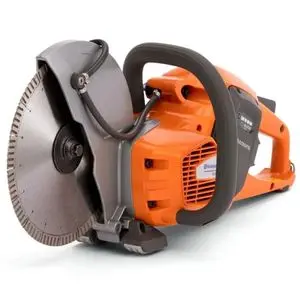 The Husqvarna K 535i is a compact cordless cutter designed for lighter landscaping and hardscaping. Its 1.2 kW brushless motor powers a 9″ (230 mm) blade and provides a maximum cutting depth of 3″ (76 mm). Suitable for wet or dry cutting, it can tackle roof tiles, garden slabs, and light concrete.
At just 7.7 lbs (3.5 kg) without side-packed items, this Husqvarna disc cutter is designed for easy handling. An electric blade brake stops the blade from full speed in 3.1 seconds, while SavE™ mode helps optimise battery runtime. The K535i also forms part of Husqvarna’s interchangeable battery system.
Find out more about the Husqvarna K 535i Cordless Power Cutter here.
STIHL TSA 300 Cordless Cut-Off Machine
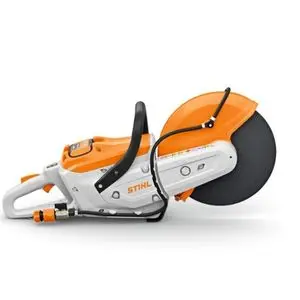 For professionals requiring greater cordless cutting capacity, the STIHL TSA 300 combines a 12″ (300 mm) disc with a powerful 2.5 kW EC motor. Designed for construction, hardscaping, and pipework, it can cut brick, concrete, steel, and stone to a maximum depth of 4.3″ (110 mm).
This machine weighs 13.9 lbs (6.3 kg) without its battery and belongs to STIHL’s professional AP System. Useful features include an integrated water connection for dust suppression and cooling, a magnesium wheel guard, and a fast-stop brake. A removable magnetic filter also helps protect internal components from ferromagnetic particles.
Discover more about the STIHL TSA 300 Cordless Cut-Off Machine here.
STIHL TS 910i Petrol Cut-Off Machine
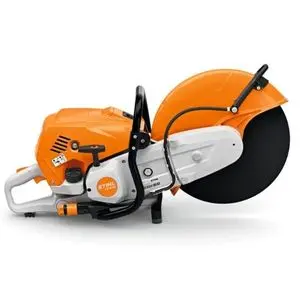 At the heavy-duty end of the range, the STIHL TS 910i is built for demanding professional cutting. Its 102.1 cc 2-MIX engine develops 8.3 hp (6.2 kW) and drives a substantial 16″ (400 mm) cutting wheel. With a maximum cutting depth of 5.7″ (145 mm), it is designed to tackle concrete, asphalt, and structural steel.
This STIHL disc cutter weighs 28.4 lbs (12.9 kg) without its cutting wheel. STIHL fuel injection supports powerful performance, while ElastoStart and a decompression valve help make starting easier. Anti-vibration technology, a cyclone pre-separation filter, and semi-automatic belt tensioning further support demanding professional use.
Learn more about the STIHL TS 910i Petrol Cut-Off Machine here.
Which Disc Cutter Should You Choose?
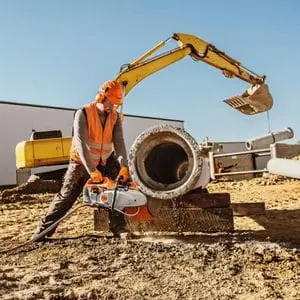 Start by considering the toughest material you expect to cut and the maximum depth you are likely to need. This will help establish an appropriate disc diameter and performance level. You can then decide whether cordless convenience or petrol endurance better suits your working conditions.
For occasional paving, landscaping, or lighter construction work, a compact 9″ machine may provide everything required. Professional users handling deeper cuts could benefit from a 12″ or 14″ model. Where substantial cutting depth and high power are priorities, a larger petrol machine may prove the better investment.
Think beyond the machine itself as well. The right cutting disc can have a major influence on performance, while water supply equipment and other accessories can make certain jobs easier, cleaner, and safer.
Find Your Next Disc Cutter at Ron Smith & Co
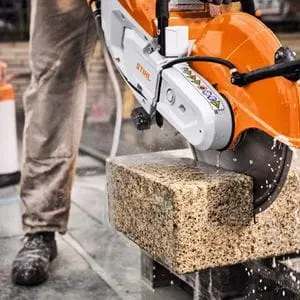 We sell a comprehensive selection of STIHL and Husqvarna disc cutters, with options covering everything from compact cordless machines to powerful professional petrol models. Whether you need a versatile masonry cutting saw, a capable concrete saw, or a heavy-duty STIHL disc cutter for demanding site work, you’ll find machines to suit a wide variety of applications, right here.
We also stock a number of useful disc cutter accessories, helping you equip your machine for the work ahead.
Choosing the correct disc cutter and supporting equipment can make a significant difference to performance, so our friendly staff are always on hand to offer you their expert advice. Whatever your cutting requirements, we’ll help you find the right equipment to tackle your work confidently.