A 2-wheel tractor gives estates, smallholdings and contractors a compact, versatile alternative to full-size tractors and multiple dedicated machines. Easier to manoeuvre in confined areas and gentler on the ground, it can tackle mowing, cultivation, vegetation management and more with compatible attachments, including work on challenging terrain.
Why a 2-Wheel Tractor Could Benefit Your Business
Managing land efficiently often means having the right machinery for several very different jobs. On an estate, smallholding or contracting business, however, buying a separate powered machine for every task can quickly become expensive. It also creates additional demands for storage, transport and maintenance.
A 2 wheel tractor offers a different approach. Rather than being designed around one specific job, it provides a powered platform that can work with compatible implements. Depending on the model, these can include equipment for mowing, vegetation clearance, cultivation and other forms of land management.
Compact dimensions allow these machines to reach places that larger tractors may struggle to access. For estates, smallholders and professional contractors, that combination of versatility and manoeuvrability can make a two-wheel tractor a remarkably useful investment.
What Is a 2-Wheel Tractor?
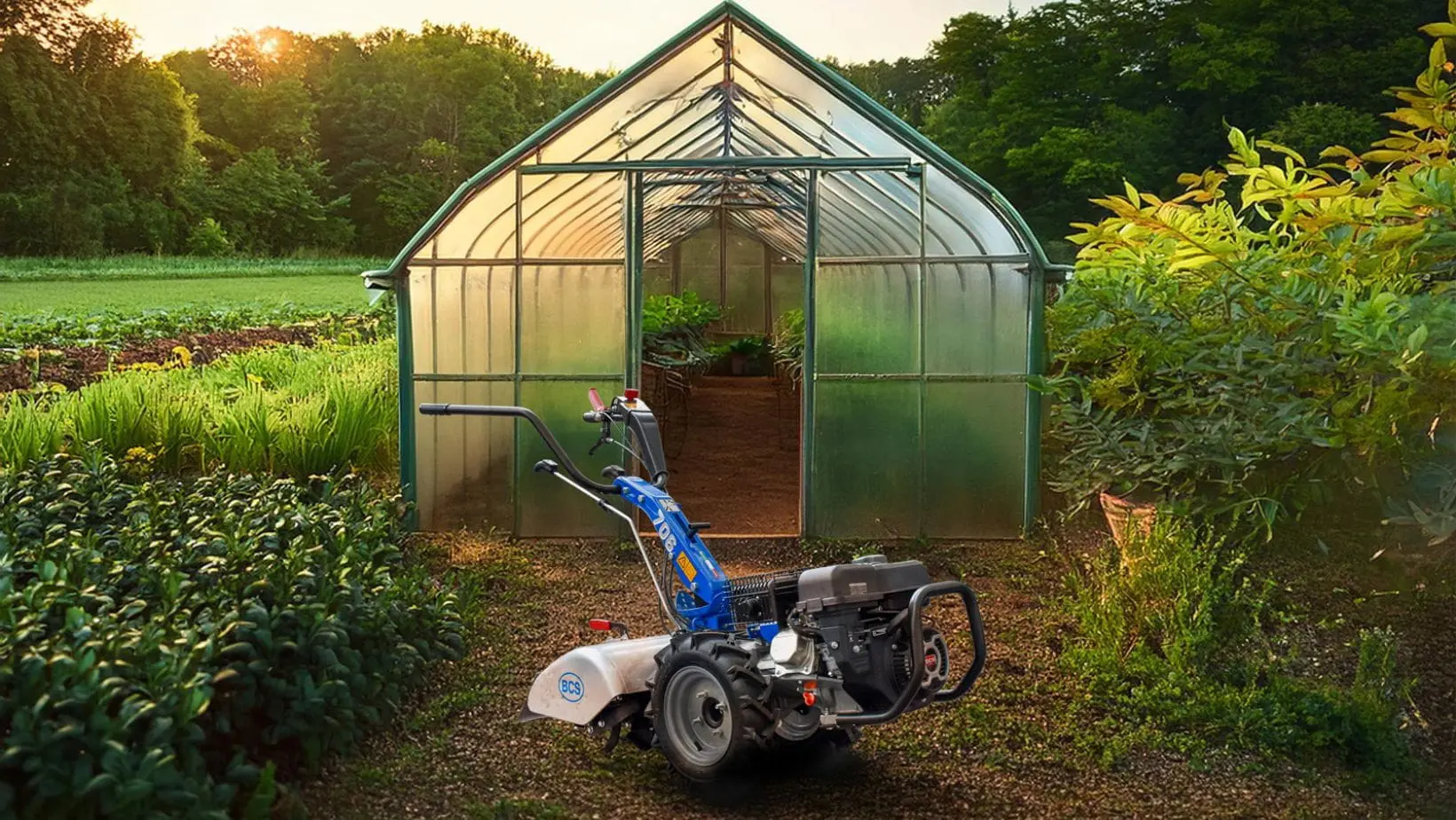
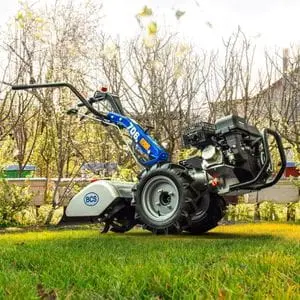 A two-wheel tractor is a pedestrian-controlled machine built around a powered axle and two driven wheels. The operator walks behind the unit and controls it using handlebars, which explains why this type of machinery is also known as a walking tractor or pedestrian tractor.
Unlike a conventional garden cultivator, a suitable power unit can be paired with different compatible implements. This allows one machine to perform several roles rather than remaining dedicated to a single seasonal task.
Specifications vary considerably between models. Some machines use conventional geared transmissions, while more advanced units may feature hydrostatic drive and assisted steering. Features such as differential locks, agricultural tyres and specialist braking systems can provide additional control on challenging terrain.
The result is machinery that occupies a compelling position between conventional pedestrian equipment and a four-wheel tractor. It offers substantial working capability without the size and access requirements of larger agricultural machines.
One Power Unit, Many Different Jobs
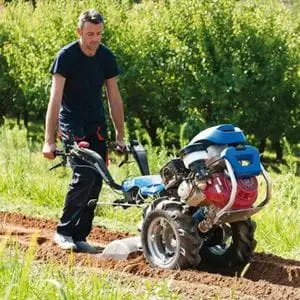 Versatility is perhaps the strongest reason to invest in a 2-wheel tractor. Instead of maintaining several engines across a collection of individual machines, owners can build a system around one suitable power unit and a selection of compatible implements.
The possibilities depend on the tractor chosen. Available two wheel tractor attachments include rotavators, cultivators, scythe cutter bars, flail mowers and other specialist equipment. Some professional machines support an even broader selection of implements.
This modular approach can be particularly attractive when different jobs arise throughout the seasons. A machine used to manage vegetation at one point in the year could undertake a completely different task later on.
There are practical benefits beyond versatility too. Fewer individual powered machines means less equipment taking up valuable storage space. Contractors may also find it easier to transport a power unit and selected implements than several complete machines.
Why Estates Can Benefit From a 2-Wheel Tractor
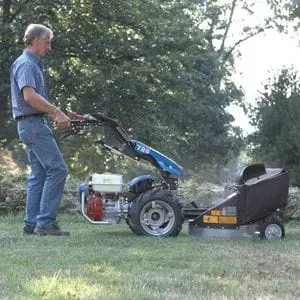 Large estates rarely consist of one uniform landscape. Formal grounds can sit alongside meadows, woodland margins, paddocks, orchards and areas of rough vegetation. Access may also vary considerably across the property.
This is where a compact pedestrian tractor can prove especially valuable. Its smaller footprint enables the operator to negotiate narrow gateways, work between trees and reach awkward corners where bringing in a conventional tractor may be impractical.
Choosing the appropriate implement also allows estate teams to adapt the machine to changing workloads. A two wheel tractor mower configuration can be used for vegetation management, while another attachment may enable the same power unit to undertake cultivation or other seasonal work.
A 2-wheel tractor does not necessarily replace larger estate machinery. Instead, it can complement it by taking responsibility for locations and jobs where compact dimensions, manoeuvrability and attachment versatility are more important than sheer size.
An Excellent Fit for Smallholdings
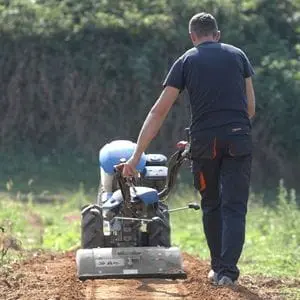 Smallholders frequently need to accomplish a wide variety of jobs across relatively modest areas. Vegetable plots may require cultivation, while orchards, paddocks and field margins need vegetation management. Purchasing dedicated powered equipment for every application is not always economical.
A two wheeler tractor can provide a practical alternative. With suitable implements, one power unit can form the heart of a compact machinery collection that develops alongside the smallholding.
Its relatively narrow dimensions can be advantageous around cultivated areas, particularly where working space is limited. Compared with heavier four-wheel machinery, the lower overall footprint of a walking tractor can also help reduce unnecessary pressure on the ground.
For owners moving up from lightweight domestic equipment, a professional 2-wheel tractor can provide a significant increase in capability without requiring the space associated with a conventional tractor. It therefore offers a useful middle ground between manual work and larger agricultural machinery.
A Flexible Tool for Professional Contractors
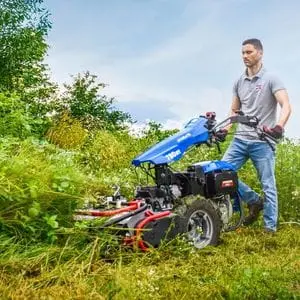 For contractors, versatility needs to translate into productive working time. Machinery that spends most of the year waiting for one particular seasonal task has to justify the space, maintenance and capital tied up in it.
The tractor 2 wheel format offers an attractive alternative because compatible implements can enable the same power unit to earn its keep across different types of work. This can be particularly useful to landscapers, vegetation management specialists and grounds maintenance professionals.
Access is another major consideration. Contractors cannot control the layout of every site they visit. Narrow entrances, awkward slopes and confined working areas can make conventional tractors unsuitable even when substantial mechanical assistance is needed.
A capable pedestrian machine can bridge that gap. Professional models offer excellent traction and precise control while remaining compact enough for restricted locations. Contractors can then choose appropriate implements according to the work booked, rather than transporting multiple self-contained machines unnecessarily.
Examples of Two Wheel Tractors for Sale
The versatility of 2-wheel tractors becomes clearer when looking at machines designed for different working environments. The following two BCS models demonstrate the breadth of choice available, from a compact and manoeuvrable power unit for general maintenance to a highly specialised machine built for demanding terrain and professional applications.
BCS 618 PowerSafe Crusader Power Scythe
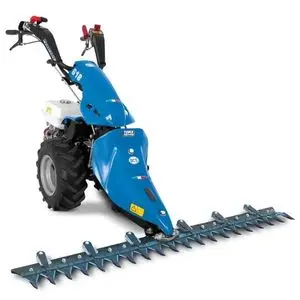 The BCS 618 PowerSafe Crusader demonstrates how a relatively compact power unit can provide capable performance for demanding maintenance work. Powered by a Honda GP160 petrol engine, it combines dependable power with dimensions suited to confined areas and restricted access.
Three forward and three reverse speeds give operators flexibility across changing terrain, while the driven agricultural wheels provide excellent traction. A locking differential further improves control and manoeuvrability, particularly when negotiating obstacles or working across uneven ground.
The BCS 618 can operate a range of attachments, including scythe cutter bars, mowers, a dozer blade, snow blade, snow thrower and sweeper. All of these implements can be purchased separately, allowing the power unit to be configured around the intended workload.
For smallholdings, estates and professional users needing compact machinery with strong cutting credentials, the BCS 618 provides an excellent example of the versatility available from this class of machine.
Learn more about the BCS 618 PowerSafe Crusader Power Scythe here.
BCS 660HY Hydrostatic Petrol Bank Commander
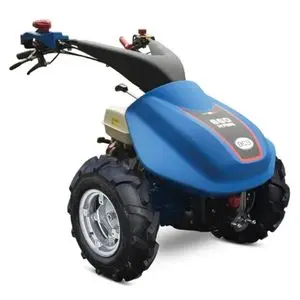 At the more specialised end of the range, the BCS 660HY Bank Commander demonstrates what a professional two-wheel tractor can achieve on difficult ground. Its Honda GX390 Banks petrol engine enables operation on inclines reaching 40 degrees, making the machine particularly relevant to steep grassland and challenging estate environments.
Hydrostatic transmission provides smooth forward and reverse speed adjustment, while hydraulically assisted steering helps the operator make accurate changes in direction. BCS PowerSafe hydraulic clutch technology provides efficient power transfer and rapidly stops the wheels and implement when the operator presence control is released. AutoHold braking adds further reassurance on demanding slopes.
A three-pin claw PTO enables the 660HY to operate an extensive selection of compatible front-mounted implements. Options include flail, rotary and mulching mowers, scythe cutter bars, scarifiers, hay rakes, brushes, snow ploughs, chippers and even a mini baler.
For contractors and estate teams facing difficult terrain, this premium machine showcases just how sophisticated modern 2-wheel tractors can be.
Discover more about the BCS 660HY Hydrostatic Petrol Bank Commander here.
Tackling Ground That Larger Machinery Cannot
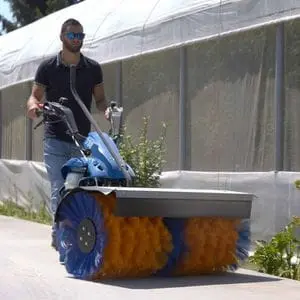 As you can see, compact size should not be confused with limited capability. One of the greatest strengths of the two-wheel tractor concept is its ability to put useful mechanical power into places where larger equipment can become inconvenient.
This can be particularly important around orchards, narrow paths, field boundaries and other restricted areas. Specialist machines can extend those benefits to steep banks and challenging slopes where the suitability of conventional machinery may be limited.
Because the operator walks behind rather than sitting on the machine, the working experience is fundamentally different from driving a compact tractor. Choosing equipment appropriate to the terrain and following the manufacturer’s operating guidance remain essential, especially when slopes are involved.
Nevertheless, the combination of traction, compact dimensions and precise control can make a quality walking tractor an invaluable addition to a wider fleet of machines.
Reduce the Need for Multiple Powered Machines
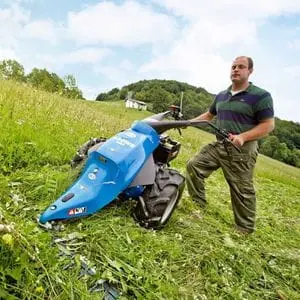 Every dedicated machine comes with its own engine or motor, controls and maintenance requirements. It also needs somewhere to be stored and, for contractors, potentially transported between jobs.
Building a system around one 2-wheel tractor can simplify matters. Instead of buying complete machines for several applications, you can select a suitable base unit and add compatible implements according to genuine requirements.
However, that does not mean one power unit can operate every attachment on the market. Compatibility varies between models, and implements should always be matched carefully to the tractor concerned.
When correctly specified, this approach can provide excellent long-term flexibility. An estate might expand its collection as maintenance requirements change, while a smallholder can invest in additional implements as their holding develops. Contractors can similarly broaden the services they offer without having to add another complete powered machine each time.
Choosing the Right 2-Wheel Tractor
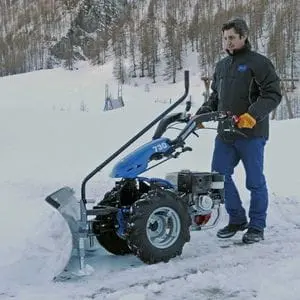 The best machine is not automatically the biggest or most powerful. Selection should start with the jobs it needs to perform and the conditions in which it will operate.
Someone primarily managing grass and vegetation may require a very different setup from a smallholder focused on cultivation. Steep banks introduce another set of considerations, while professional contractors may prioritise productivity, operator comfort and a broad choice of compatible implements.
Transmission and steering arrangements can also make a considerable difference. A geared machine may provide everything required for one application, whereas demanding terrain might justify the additional control offered by hydrostatic drive and assisted steering.
Most importantly, buyers should consider the complete system rather than viewing the power unit in isolation. The value of a two-wheel tractor comes from matching the right machine with the right implements for the work ahead.
Find 2 Wheel Tractors for Sale at Ron Smith & Co
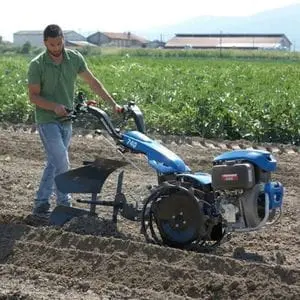 For estates, smallholdings and contractors, a 2-wheel tractor can offer an impressive combination of versatility, accessibility and professional capability. Its real strength is the opportunity to build a machinery system around your land rather than purchasing a separate powered machine for every job.
Whether you need to maintain grassland, tackle difficult vegetation, cultivate ground or work within confined areas, there are configurations designed for a wide variety of applications.
We sell a superb range of 2-wheel tractor base and complete units, including machinery suited to both straightforward land management and highly demanding professional work. You will also find an impressive selection of attachments and implements designed to unlock the versatility these machines can offer.
And if you’re unsure which 2-wheel tractor or combination of attachments best suits your land, workload or terrain, our friendly team is always happy to help. With extensive knowledge of professional groundcare machinery, we can guide you through the available options and help you choose the setup that best meets your requirements.