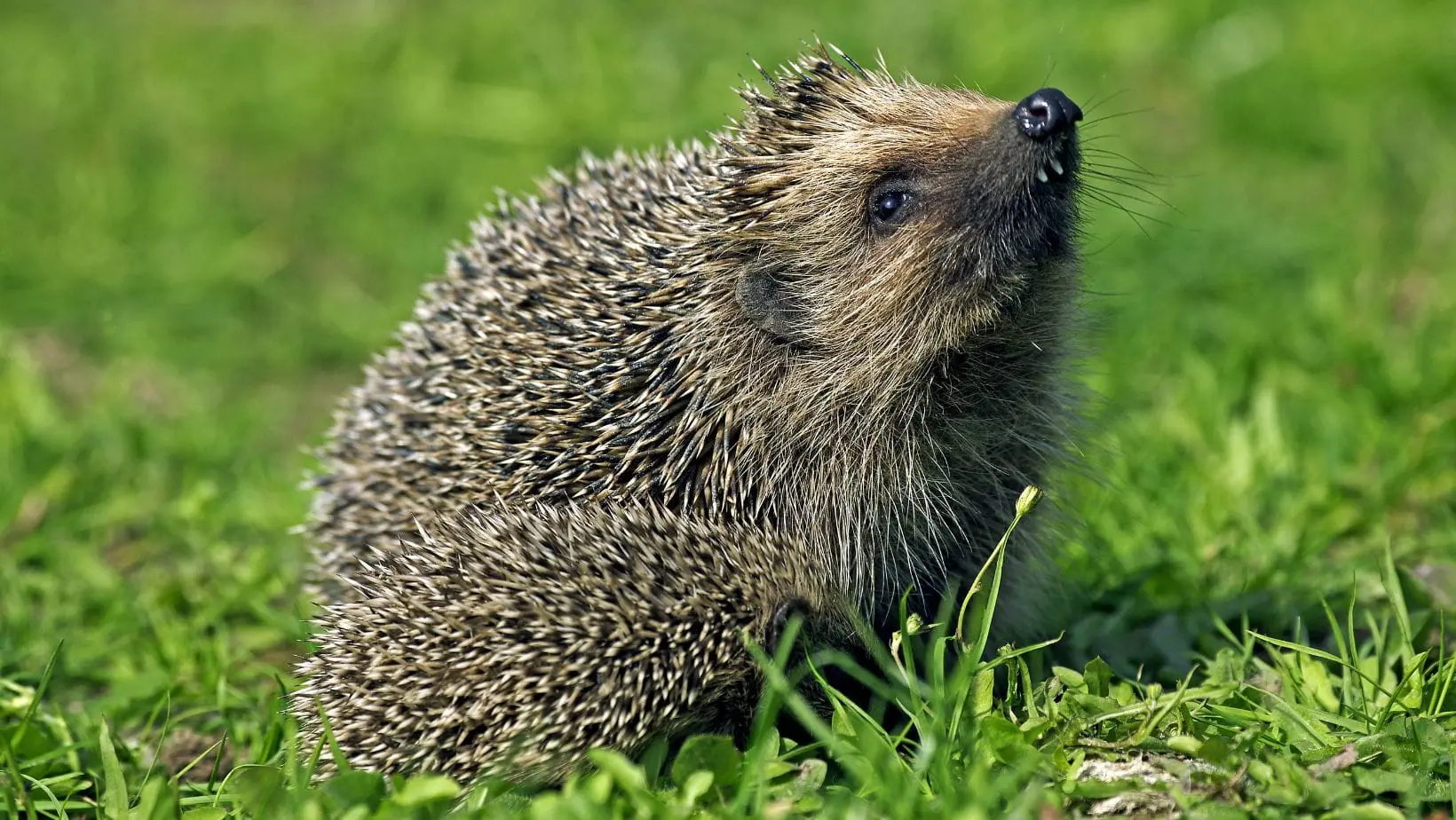
Hedgehogs are most active in British gardens from spring to autumn and are particularly vulnerable to robot mowers at night. To help keep them safe, schedule your robotic mower to operate during daylight hours, check the lawn before mowing, and create wildlife-friendly areas away from the cutting zone. Small changes can make a big difference to hedgehog safety.
How Robot Mower Owners Can Help Keep Hedgehogs Safe
Robot mowers have changed the way many of us look after our lawns. They’re quiet, convenient, efficient, and can keep grass looking neat with very little effort from the owner. For busy people who want a consistently tidy lawn, it’s easy to see why robotic lawn mowers have become so popular.
But gardens aren’t just outdoor living spaces. They are also valuable habitats for wildlife, including one of Britain’s best-loved mammals: the hedgehog. As more people turn to automated lawn care, it’s important to understand how robot mower owners can enjoy the benefits of this technology while helping to protect hedgehogs that may wander into their garden.
The good news is that hedgehog safety and robotic mowing do not have to be in conflict. With sensible settings, careful scheduling and a few hedgehog-friendly habits, you can significantly reduce the risk to hedgehogs while still keeping your lawn looking spick and span.
When Hedgehogs Are Most at Risk from Robot Mowers
 Hedgehogs are most likely to visit British gardens between spring and autumn, with activity typically peaking from May to September. After emerging from hibernation in March or April, they spend the warmer months feeding, breeding and raising their young. During autumn, hedgehogs continue to roam in search of food as they build up fat reserves for hibernation. Of course, this whole period of the year coincides with the lawn-growing season, meaning robotic mowers and hedgehogs are often using the same garden spaces at the same time.
Hedgehogs are naturally active at night. During the day, they usually sleep in sheltered places such as hedges, long grass, compost heaps, log piles or purpose-built hedgehog houses. Once dusk arrives, they begin moving through gardens in search of food, mates and nesting materials.
This nocturnal behaviour is the key reason robot mower safety matters so much. Many people are tempted to run their robotic mower overnight, when the lawn is not being used and the machine can work undisturbed. Unfortunately, that is also when hedgehogs are most likely to be out foraging.
How Hedgehogs and Robot Mowers React to Each Other
 A hedgehog’s natural defence is to freeze or curl up in a ball rather than quickly run away. While this is effective against many natural threats, it can put them at risk around garden machinery. If a robotic mower approaches, a hedgehog may not retreat in time, particularly if it is young, unwell or hidden in longer grass.
Recent research has helped bring more attention to this issue. Oxford University has developed a hedgehog safety test for robotic lawnmowers, using specially designed crash test dummies to assess how different machines respond to hedgehog-like obstacles. The work has involved support from organisations including the British Hedgehog Preservation Society, STIHL and Husqvarna, showing that researchers, conservation groups and major manufacturers are taking the problem seriously. You can read more about the project in Oxford University’s article on how researchers developed a hedgehog safety test for robotic lawnmowers here.
How You Can Help Keep Hedgehogs Safe
If you own a robotic lawnmower, there are a number of ways you can help keep hedgehogs safe in your garden. These simple practices primarily involve adjusting the lawn robot’s settings, being mindful of scheduling, and developing a few hedgehog-friendly habits of your own.
The Most Important Rule: Do Not Mow at Night
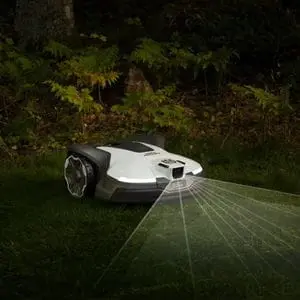 The single most important step you can take is simple: only run your auto mower during daylight hours.
Avoiding dusk, night-time and the early hours of the morning dramatically lowers the chance of your robot mower meeting a hedgehog. For most gardens, a safe mowing schedule will sit somewhere between mid-morning and late afternoon. This gives any nocturnal visitors time to return to their shelter before the mower begins work.
A practical approach would be to set your robot lawn mower to operate between around 9am and 5pm, adjusting the exact times to suit the season, your garden and how much cutting is required. During late spring and summer, when hedgehogs are particularly active and daylight lasts longer, there is usually plenty of time for the mower to complete its work without running too late.
It is also worth checking your automower’s app or control panel regularly. Some robotic mowers have automatic or adaptive scheduling features, which can extend mowing times depending on grass growth or weather conditions. These features are useful, but owners should make sure they do not push mowing into dusk or darkness.
Choose Shorter, Smarter Mowing Sessions
 A robot mower does not need to cut the lawn in the same way as a traditional petrol or cordless mower. Instead of removing a lot of grass in one go, it trims little and often, maintaining the lawn at a steady height. This makes it well suited to shorter, more controlled mowing sessions.
For hedgehog safety, shorter sessions during daylight are best. If your lawn needs more attention during fast growth periods, increase the cutting frequency rather than extending the mower’s working hours into unsafe times.
Keeping the grass at a sensible height can also help the machine operate more efficiently. Very long grass can hide wildlife, toys, fallen branches and other obstacles. A regular mowing pattern, combined with daylight-only operation, gives you a tidier lawn while making it easier to spot potential hazards before the mower begins work.
Check the Lawn Before the Automower Starts
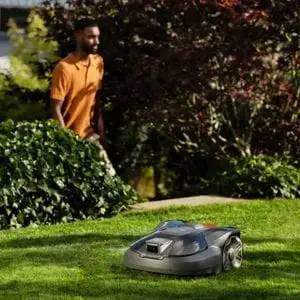 Even with a careful schedule, it’s good practice to check the garden before your robot mower begins work. This doesn’t need to be complicated or time-consuming. A quick walk across the lawn can make a real difference.
Look around the edges of the grass, near borders, under shrubs and beside compost areas. Hedgehogs often travel along boundaries rather than across open lawn, so these areas deserve particular attention. Also check any wilder parts of the garden, especially if the mower works close to them.
This habit is especially useful when hedgehogs are most active. Young hedgehogs may also be present during the summer months, and they can behave more boldly or unpredictably than adults. If you see a hedgehog, do not start the mower. Give the hedgehog time to move away naturally, and keep the machine switched off until you are confident the lawn is clear.
Be Careful with Manual Starts and Parking
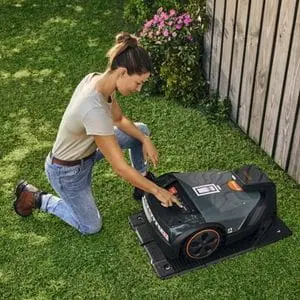 Many robot mower owners rely on an automatic schedule, but it’s also common to start the machine manually after a period of rain, before visitors arrive, or if the lawn starts to look untidy. Manual starts can be riskier because they may happen outside the normal safe mowing window.
So, before starting your robotic mower by hand, think about the time of day. If it is late afternoon and the session could run into dusk, leave it until the next day. If it is already getting dark, do not mow.
It is also worth checking where the mower is parked. If the charging station is near a hedge, shed, compost heap or overgrown area, inspect the space around it before the machine leaves its dock. A hedgehog sheltering nearby may be difficult for the mower to detect until it is too close.
Understand Your Mower’s Safety Features
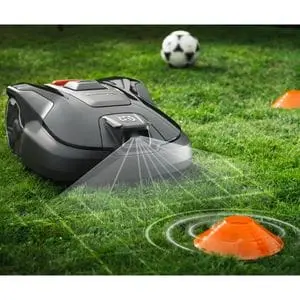 Robotic lawn mowers vary widely in how they detect and respond to obstacles. Some older or more basic models rely heavily on bump sensors, meaning they need to make contact before changing direction. More advanced models tend to use lift sensors, tilt sensors, radar, cameras, ultrasonic detection, GPS-assisted mapping or AI-supported object recognition.
These developments are encouraging, but no robot mower owner should assume their machine is completely hedgehog-proof. A safety feature is useful, but it is not a substitute for responsible scheduling. Even the best robot mower should still be run during the day, checked regularly, and kept away from known wildlife areas where possible.
When choosing a new robotic lawn mower, look closely at its obstacle detection technology. Consider how the blades are positioned, how quickly the machine stops, and whether it can recognise small objects before contact. Brands such as STIHL and Husqvarna being involved in hedgehog safety research is a really positive sign for the future of the industry, but owners still need to use the technology thoughtfully.
Create Hedgehog-Friendly Areas Away from the Mowing Zone
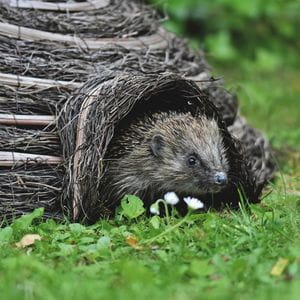 A safe garden isn’t just about the mower. It’s also about giving hedgehogs suitable places to travel, feed and shelter. One of the best things gardeners can do is create areas where wildlife is welcome and machinery does not operate.
If possible, leave a wilder corner with longer grass, leaves, native plants or a log pile. This gives hedgehogs and other wildlife somewhere to thrive. A compost heap can also be useful, provided it is checked carefully before being disturbed. If you have space, a hedgehog house placed in a quiet, sheltered spot can provide valuable protection.
Think about how your robot mower’s working area is set up. If it uses a boundary wire, keep the cutting zone away from log piles, dense hedges and known nesting areas. If you use a wire-free robotic mower, make sure its mapped area does not include wildlife corners. The aim is to separate neat lawn maintenance from natural habitat.
Help Hedgehogs Move Safely Between Gardens
 Hedgehogs can travel surprisingly long distances in a single night, often moving through several gardens in search of food and shelter. Solid fencing can block these routes, forcing hedgehogs towards roads or unsuitable spaces.
A simple ‘hedgehog highway’ can help. This is a small gap at the bottom of a fence or gate, usually around 13cm x 13cm, allowing hedgehogs to pass between gardens. If you share boundaries with neighbours, encouraging several connected gardens to do the same can make a real difference.
For robotic mower owners, these highways are helpful because they allow hedgehogs to move naturally rather than becoming trapped in one garden. However, they also mean hedgehogs may enter your lawn unexpectedly. This makes daylight-only mowing even more important.
Avoid Leaving Food on the Lawn at Mowing Times
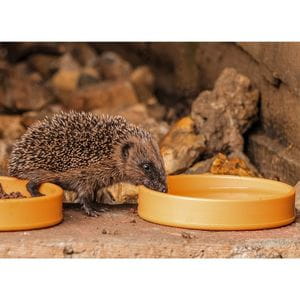 Many gardeners like to support hedgehogs by putting out food and water. This can be helpful, especially during dry spells, but it should be done carefully if you own a robotic mower.
Place feeding stations well away from the mowing area, ideally in a sheltered corner where the auto mower never operates. Do not leave food in the middle of the lawn or close to the mower’s route, as this could encourage hedgehogs into the cutting zone.
Fresh water is always useful for wildlife, particularly during hot weather. Again, place it somewhere safe and stable, away from the robotic mower’s working area. A shallow dish near a hedge or wildlife corner is better than one on open grass.
Keep Your Auto Mower Well Maintained
 A well-maintained robot mower is more predictable and safer to use. Blunt or damaged blades can make cutting less efficient, causing the mower to work harder or spend longer on the lawn. Dirty sensors may reduce obstacle detection performance, and software that has not been updated may miss improvements from the manufacturer.
Clean your auto mower according to the manufacturer’s instructions, inspect the blades regularly and keep the underside free from excessive grass build-up. Check for firmware or app updates too, especially if your mower uses smart mapping, object detection or camera-based features.
Maintenance will not make a lawn robot safe on its own, but it supports every other precaution. A robot mower that operates correctly, stops when it should and follows its intended schedule is much easier to manage responsibly.
Helping Hedgehogs While Enjoying a Smarter Lawn
 Hedgehogs are a much-loved part of British garden wildlife, but they face many pressures, from habitat loss and road traffic to garden hazards and reduced food sources. Robot mowers are only one part of a much wider picture, but they are something we can control.
If you own a robotic lawn mower, small changes can have a big impact. Run your machine during daylight. Avoid dusk and night-time mowing. Check the lawn before the automower starts. Give hedgehogs safe spaces away from the cutting area. Keep food, water and shelter in wildlife-friendly corners rather than on open grass.
These habits are simple, practical and easy to build into everyday garden care. They allow you to enjoy the convenience of a robot mower while helping to protect one of Britain’s most treasured garden visitors.
If you’d like to learn more about hedgehogs and the simple steps you can take to support them in your own garden, visit the British Hedgehog Preservation Society’s website today.