Cordless lawnmowers typically run for 20–45 minutes per charge, covering around 150–400m² depending on battery size, grass conditions, and mower type. Longer, wetter grass and self-propelled drive reduce runtime, while regular mowing and a sharp blade help you get more done per charge. For many gardens, having two batteries is the best way to finish mowing in one go without interruptions.
All You Need to Know About Cordless Mower Runtimes
Battery powered lawnmowers have come a long way in a short space of time. Once regarded as only suitable for very small gardens, these machines now offer a genuinely capable way of keeping almost any lawn looking sharp. Without the noise, fumes, and maintenance demands of petrol, a cordless mower is increasingly becoming the lawnmower of choice for both domestic and professional gardeners.
With battery mowers’ improved capabilities and increasing popularity, we’re now regularly being asked how long will a cordless mower run on a single charge? And even more importantly, how much lawn will it actually cover?
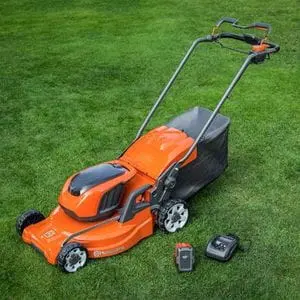 So, if you’re considering buying a battery lawn mower for the first time, or looking to upgrade to a more powerful model, let’s take a look at runtimes and battery capacity, so you can complete your mowing with minimal fuss.
Why Cordless Mowers Are So Popular
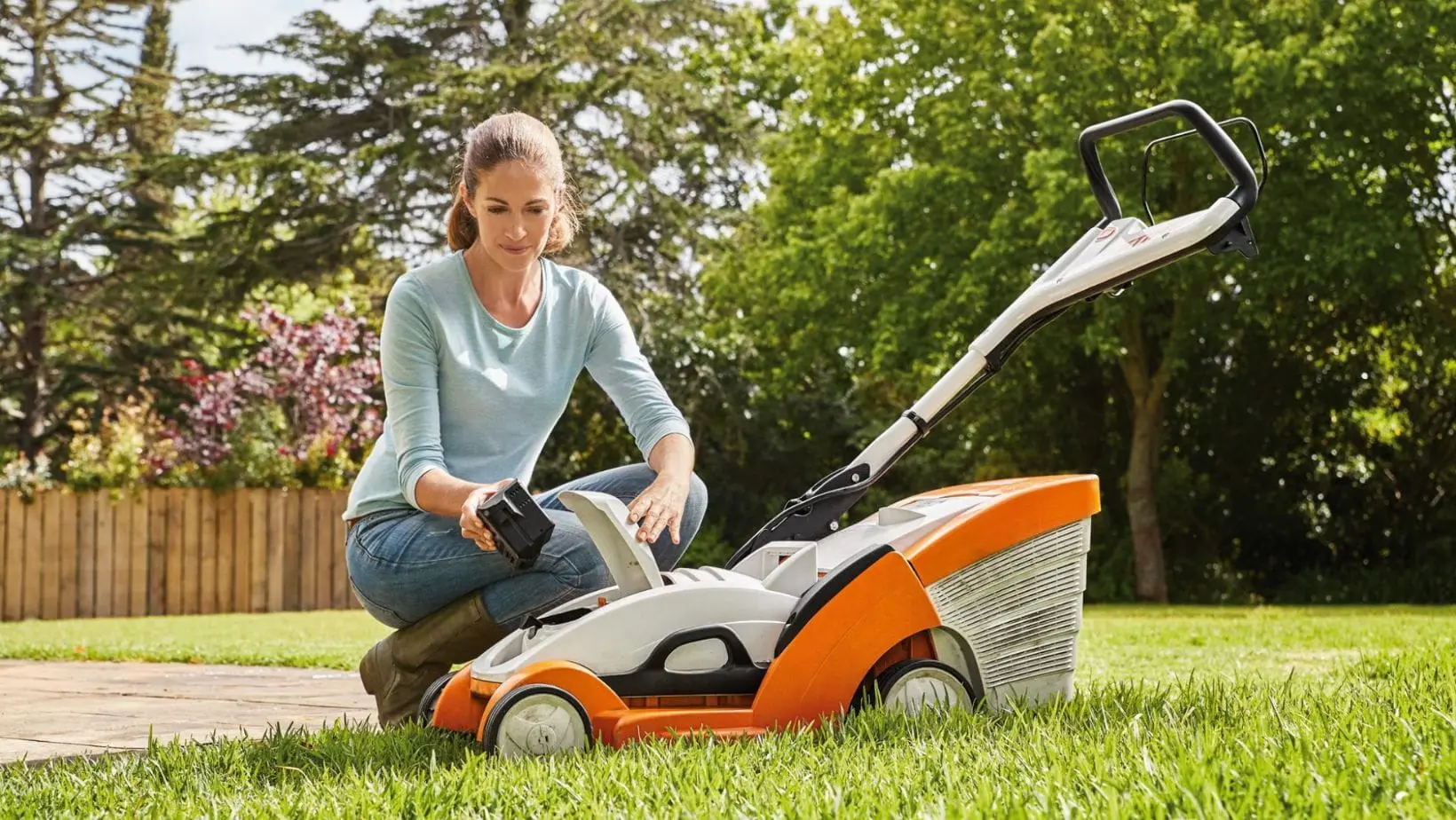
The appeal is simple. A cordless mower gives you the freedom of a petrol machine, but with far less hassle. There’s no fuel to store, no pull cord to fight with, and no engine servicing to factor in. You charge the battery, slot it in, and get straight to work.
Battery lawn mowers are a great match for modern gardens. Many British lawns are made up of smaller sections, curved borders, and tight corners — and a battery mower is usually much easier to manoeuvre than a heavier petrol model. You also avoid the trailing cables of traditional electric lawnmowers, which is a big win for both convenience and safety.
Cordless Mower Runtime: What’s ‘Normal’ on One Charge?
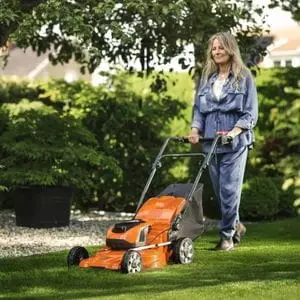 In average mowing conditions, most cordless lawnmowers will run for around 20 to 45 minutes per charge.
That’s the headline number most people want, but it’s only part of the story. Runtime can drop sharply in thick or wet grass, and it can increase if you’re simply topping up a lawn that’s already well maintained.
As a general guide:
- A compact cordless mower with a smaller battery might deliver 10 to 25 minutes of mowing.
- A typical domestic model with a mid-sized battery often manages 25 to 40 minutes.
- Higher-capacity setups and premium systems can stretch to between 40 and 75 minutes, depending on the load.
The key point is that cordless mower runtime isn’t fixed. It’s a blend of battery capacity, mower efficiency, and how demanding the grass is on the day.
The Even More Useful Question: How Much Lawn Can You Cover?
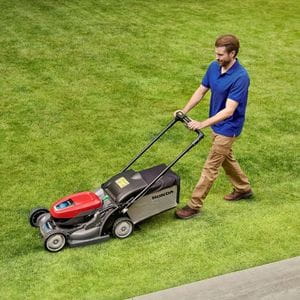 For many people, runtime in minutes is less helpful than the real-world result: how many square metres can I mow before the battery runs out?
In typical conditions, an average cordless mower will usually cover around 150 to 400 m² per charge. Bigger batteries and more efficient systems can push beyond that, while tougher mowing conditions can pull it down.
Here are some realistic ranges:
- Smaller battery setups often cover 100 to 250 m² per charge.
- Mid-range batteries commonly cover 200 to 500 m² per charge.
- Larger battery systems can reach 400 to 800 m² per charge.
This might mean that your lawn can be completed on one battery charge, but it’s always nice to have a spare battery ready to go.
Battery Capacity Explained: Ah, Wh, and Why It Matters
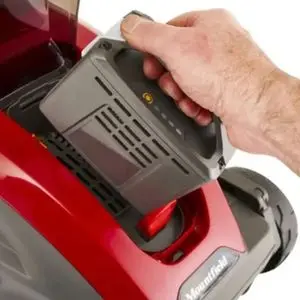 Battery performance is often described using Ah (amp hours), but the most useful figure for runtime is Wh (watt hours). Calculated by multiplying amp hours by voltage, watt hours tell you how much total energy the battery holds.
In simple terms, more watt hours usually means longer runtime and more area covered.
For example, a battery around 180Wh often delivers enough energy for a solid domestic mow, while 300Wh and above is more comfortable for larger lawns or heavier conditions.
Voltage also plays a part, but it doesn’t automatically mean longer runtime. What matters is the total energy stored, and how efficiently the mower uses it.
What Else Affects Cordless Mower Runtime?
Battery capacity is only one piece of the puzzle. If you’ve ever had a cordless mower feel brilliant one week and underwhelming the next, it’s usually because the mowing conditions changed.
So, here are the other major factors that influence runtime and coverage…
Grass Length and Thickness: A Big Drain on Battery Power
The longer and denser the grass, the harder the mower has to work. If you’re cutting a lawn that has grown quickly, the motor draws more power to keep blade speed up and maintain a clean cut.
A tidy lawn that’s mown regularly is far more battery-friendly than a lawn that has been left for weeks. If you want maximum coverage per charge, mowing little and often is one of the simplest ways to achieve it.
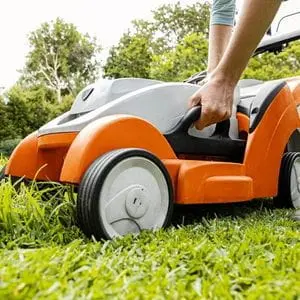 Wet Grass and Heavy Conditions
Wet grass increases resistance and can cause clumping under the deck. That means the mower has to push harder, and the battery drains faster.
If your lawn is damp or the grass is lush and springy, expect your runtime to drop. It’s not a fault with the mower — it’s simply a tougher job.
Cutting Height: Lower Isn’t Always Better
Lower cutting heights demand more effort, especially if you’re removing a lot of grass in one pass. Raising the cutting height slightly can reduce load on the mower and extend runtime, while still leaving the lawn looking neat.
If you’re chasing a short finish, it’s often better to do it in stages rather than trying to take everything down in one aggressive cut.
Self-Propelled vs Push Models
Self-propelled cordless mowers use additional energy to power the drive system. That convenience is fantastic on slopes or larger gardens, but it can reduce runtime compared with a push model using the same battery.
If you want the longest possible runtime from each charge, a push mower usually has the advantage. But if you value ease and comfort, self-propelled can be worth the trade-off.
Blade Sharpness and Cutting Efficiency
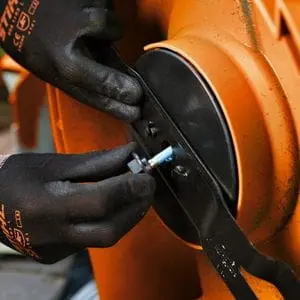 A sharp blade slices cleanly. A dull blade tears and drags. That extra resistance forces the mower to work harder, which shortens battery life and can leave a rougher finish.
Keeping your blade in good condition is one of the most overlooked ways to improve cordless mower runtime performance. It helps your lawn look better and the battery to last longer too.
Lawn Layout and Obstacles
A wide, open lawn is easier to mow. A lawn filled with borders, trees, tight corners, and garden furniture takes longer, even if the area is the same.
Frequent turning and stop-start mowing reduces efficiency, which can cut down your coverage per charge. If your garden is split into sections or has lots of detail work, it’s worth planning for slightly higher battery demand.
Temperature and Battery Condition
Battery performance changes with temperature. Cold weather can reduce available capacity, which means shorter runtimes in late autumn or early spring.
Battery age also matters. Over time, batteries naturally lose some capacity. A well-cared-for battery can last years, but a heavily used one may not deliver the same runtime as it did when new.
How Many Batteries Should I Buy to Finish Mowing in One Go?
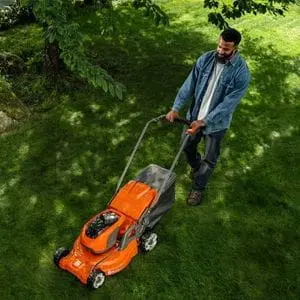 This is one of the most important questions to answer before you buy, because it affects both convenience and value.
For many customers, two batteries is the sweet spot.
One battery can be enough for most lawns, but two batteries gives you the confidence that you can finish the job without having to pause it halfway through. It also means you can mow at your regular pace, even if the grass is thicker than expected.
Here’s a practical way to think about it in relation to your own lawn:
If it’s up to around 250 m², one battery is probably enough, depending on capacity and conditions.
When your lawn is between 250 to 500 m², two batteries is usually advisable.
And should your lawn be over 500 m², two batteries is still a good call, but you may want a higher-capacity battery system, or even a third battery to be absolutely certain of uninterrupted mowing.
Choosing the correct number of batteries is the difference between a cordless mower being convenient and it being frustrating.
Tips to Maximise Runtime and Get More Done per Charge
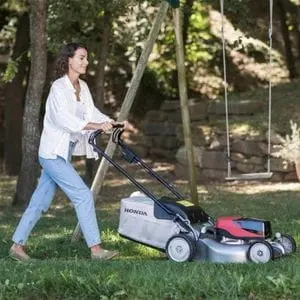 If you want to squeeze the most coverage from each battery, a few simple habits can make a noticeable difference.
- Mow regularly so the mower isn’t fighting long growth.
- Avoid mowing when the grass is wet if you can.
- Keep the blade sharp so the mower cuts cleanly and efficiently.
- Raise the cutting height slightly when the lawn is thick, then reduce it on a second pass if needed.
- Work steadily rather than rushing, especially in heavy areas.
These small changes don’t just extend runtime. They often improve the finish too.
Is a Cordless Mower Powerful Enough for Your Garden?
Nowadays, the answer is invariably yes. Modern cordless mowers are designed to cope with real grass, real weather, and real working conditions. The key is choosing the right machine and battery setup for your lawn size and mowing habits.
If you mow regularly and want a clean, tidy finish without the fumes or faff of petrol, a battery lawnmower is an excellent fit. If your lawn is large or fast-growing, you may simply need a higher-capacity battery or a spare ready to swap in.
Buy Cordless Lawnmowers and Spare Batteries Here
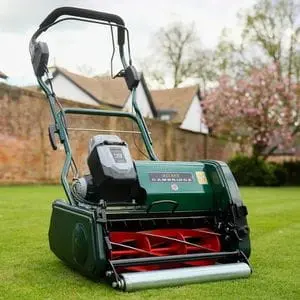 If you’re ready to embrace cordless mowing, Ron Smith & Co is the best place to shop. We have Britain’s best range of cordless lawnmowers for sale, along with spare batteries to help you get the most from your machine. What’s more, if you need help picking a suitable mower, or want tailored advice regarding battery runtimes, our friendly team are always on hand to offer expert advice.
When you choose Ron Smith & Co to supply your battery powered mower, you can rest assured that you’ll get exactly the right equipment for the job.